
Mobile games have come a long way from their earliest days.
From Angry Birds to Candy Crush to Genshin Impact, mobile games have evolved in complexity as technological developments allowed for better hardware and subsequent performance.
Today’s mobile devices are capable of far more than they’re typically given credit for outside of the industry. As the platform has grown to represent a significant portion of the global games industry, the expectations placed on mobile experiences have increased as well.
Delivering experiences that match players’ demands will require teams to rethink how we manage performance, approach visual features, structure production pipelines, among many other processes.
At Sumo Digital, our recent collaboration with Arm for the pioneering Neural Dawn is a clear example of what a strong partnership can enable. Utilising Arm’s Neural Technology, an AI-driven graphics technology, we’ve created a mobile game capable of running desktop-level environments with dynamic lighting, involving hundreds of lights together with ray-traced shadows. Through Neural Dawn, we were able to showcase the true potential of our partner’s technology through an interactive, creative, and engaging medium.
Working on this project reminded us that technology plays a critical role in enabling shifts in the industry, especially in the ever-evolving mobile space. Just as important though is how that technology is applied, such as how it integrates into real workflows, and how it ultimately enables developers to focus on creativity and unlocking the future of mobile gaming.
The Demand for Mobile Technical Excellence
Mobile has evolved into a key player in the games industry.
Having driven over 70% of new revenue growth over the past decade, it has grown to become the most important platform commercially, currently sitting at around 50% of the games industry according to the 2025 State of Video Gaming by Matthew Bell. Emerging markets continue to drive its expansion and reinforce its strategic importance.
Alongside its growth in market share, the development of hardware in mobile has also skyrocketed. Mobile hardware is now capable of delivering experiences closer to PC and console than many assume.
Sumo Digital has always strived to be at the forefront of this development. For example, our previous work on adventure game Spyder for iOS involved advanced animation systems with full 360-degree movement. We wanted to test the waters for desktop-quality gameplay on mobile devices, and needless to say the experience taught us a lot about the untapped potential of this platform.
At the same time, however, the market has become more competitive. While players are spending more time per session, overall attention is fragmented across games, social media, and other entertainment – all accessible at arm’s length. Development costs are also rising faster than consumer spend, making it important for teams to bend the cost curve, delivering higher quality without proportional cost increases.
Therefore, innovation has become a key commercial differentiator. As player expectations rise, games that stand out visually and creatively are better placed to capture attention in an increasingly crowded market.
Delivering that kind of innovation, however, needs more than ambition alone. It also depends on technical excellence, including the ability to optimise effectively, adopt new tools with confidence, and create the headroom for teams to experiment. For developers, that means creativity and technical expertise must go hand in hand.
This is where effective partnerships can come into play, enabling possibilities through the sharing of expertise and joint momentum through co-creation.
Partnerships and Co-Creation
Technology alone doesn’t create better games.
What matters is how that technology is applied within real production environments, and that’s where partnerships become essential. The most effective partnerships are iterative, with both sides contributing to how tools evolve and how they are ultimately used.
Our partnership with Arm is framed around co-creation and highlights what this kind of relationship looks like in practice.
Arm brought deep hardware and neural graphics expertise that shaped how everything was scoped and refined. Instead of simply adopting new tools late in production, we worked closely with Arm to explore emerging neural graphics technologies within an active project. Neural Dawn allowed us to refine and integrate those tools in a way that was grounded in real creative and technical requirements.
Our experience in mobile gaming put us in a position to shape Arm’s technology, resulting in a complete game experience, a medium that better explores the technology’s capabilities than a standalone demonstration. It has allowed Arm to get critical feedback from real-world game developers on how technologies would be used, and critically any improvements that would ease their adoption at scale.
The New Possibilities
When performance constraints begin to ease, thanks to new technology, the impact is hardest on game design and experience.
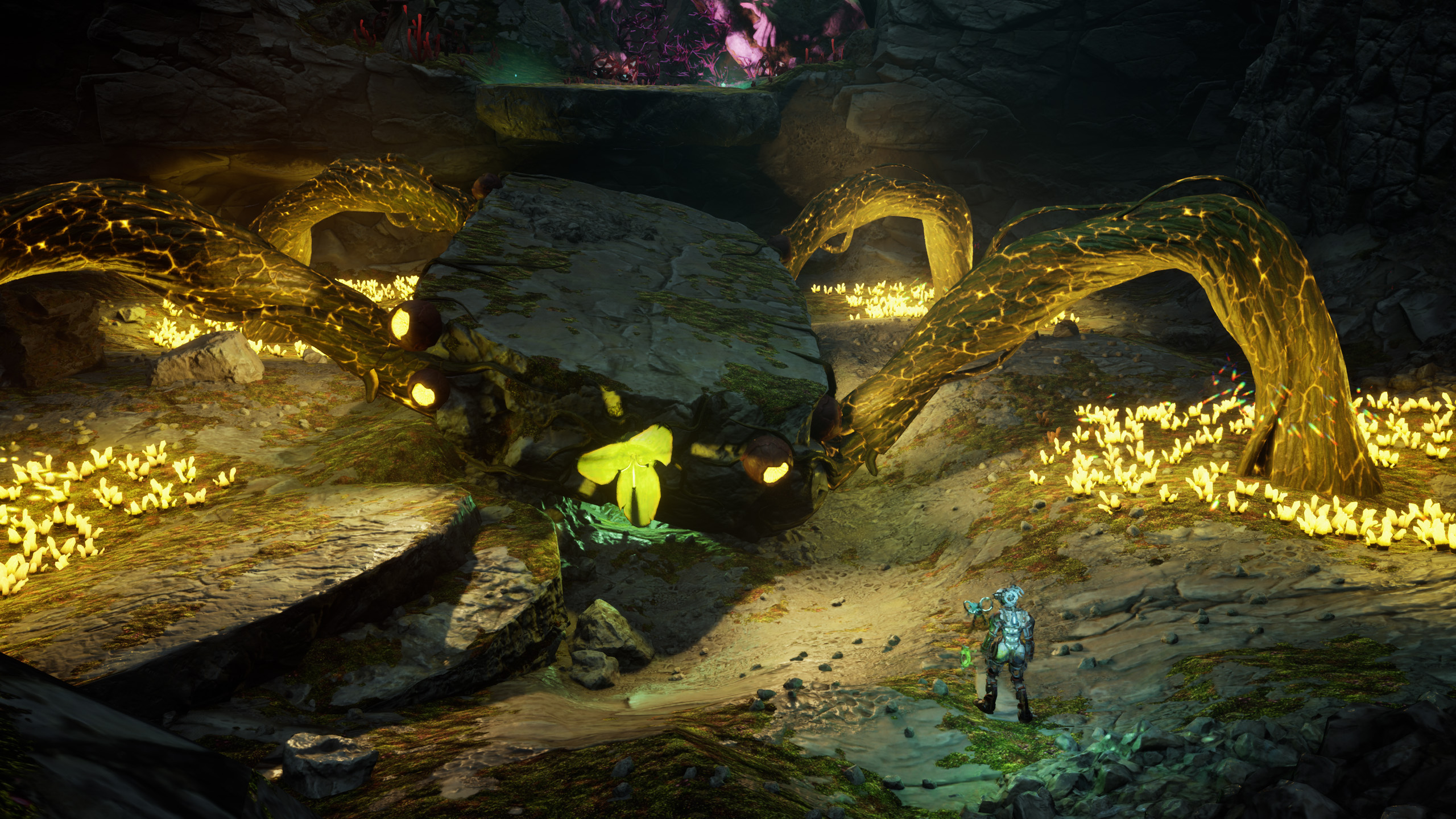
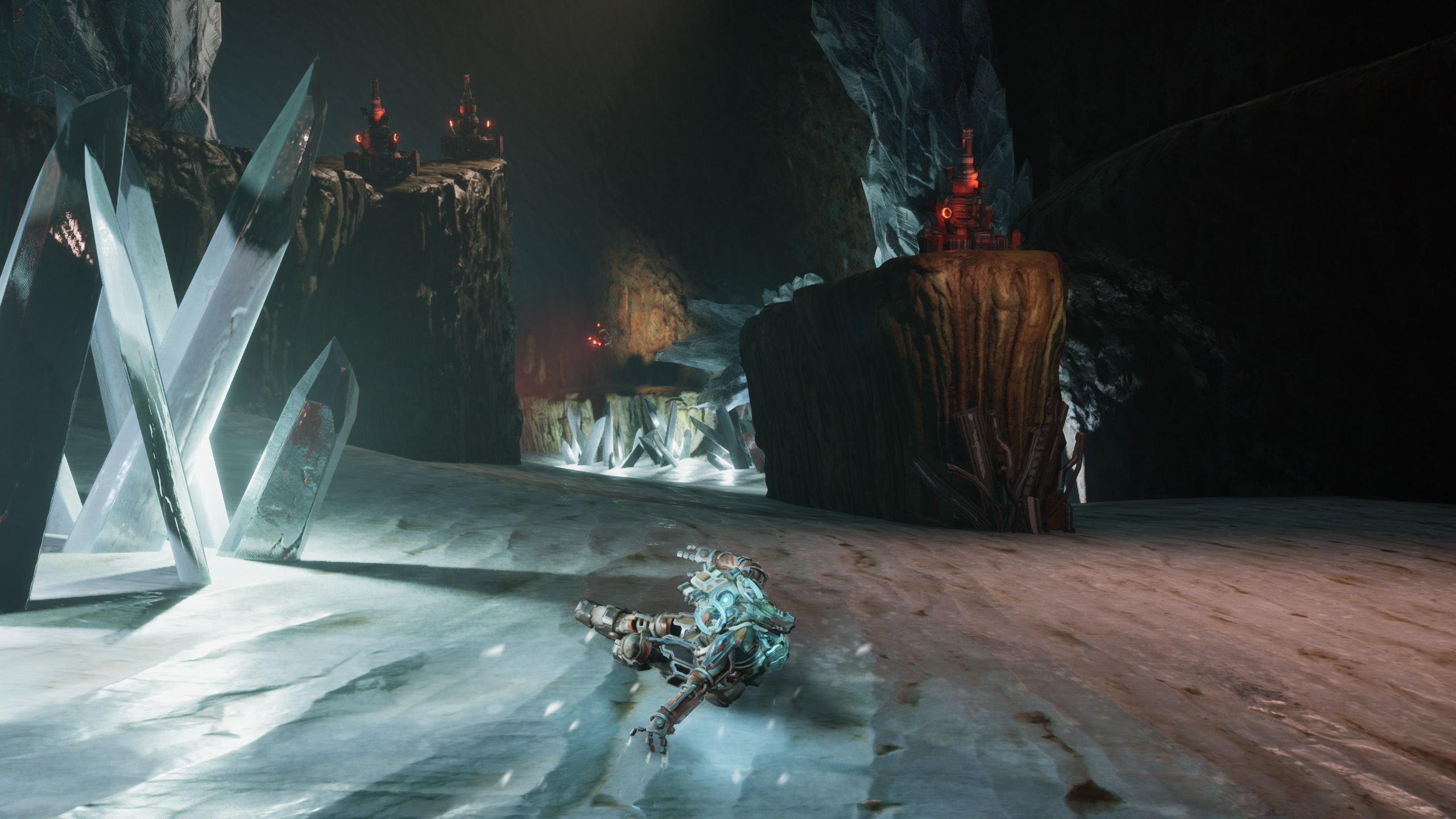
For example, lighting in Neural Dawn is interactive. We used it in gameplay to reveal paths, highlight points of interest, and guide players through the world. We created locations that evolve over time, shifting from dark environments to illuminated spaces in response to player actions.
This outcome is made possible by a combination of technical advances and new workflows.
In Neural Dawn, we used two new technologies, available as Unreal Engine plug-ins developed by Arm, which in the future will later be available publicly as part of the Neural Graphics Development Kit. Neural Super Sampling and Denoising (NSSD), a new denoiser and upscaler, allowed us to render frames from 540p, upscaled to 1080p.
Meanwhile, the Neural Frame Rate Upscaling (NFRU) frame generator allowed for a smoother frame rate where the game can be rendered from 30fps to 60fps while interpolated frames are generated. Both the modules freed up performance capacity, allowing us to utilise some of the best features Unreal Engine has to offer that were not previously seen on mobile, including ray tracing and MegaLights.
Ray-traced shadows provided more accurate and visually consistent lighting, mitigating usual Unreal Engine issues such as low-quality shadows or shadow bleeding. At the same time, MegaLights helped us work with hundreds of dynamic lights, far more than what would traditionally be feasible on mobile. We were able to use expensive light sources like rectangle lights and implemented a range of light categories, creating a beautiful and immersive visual experience far beyond what is typically expected in mobile games.
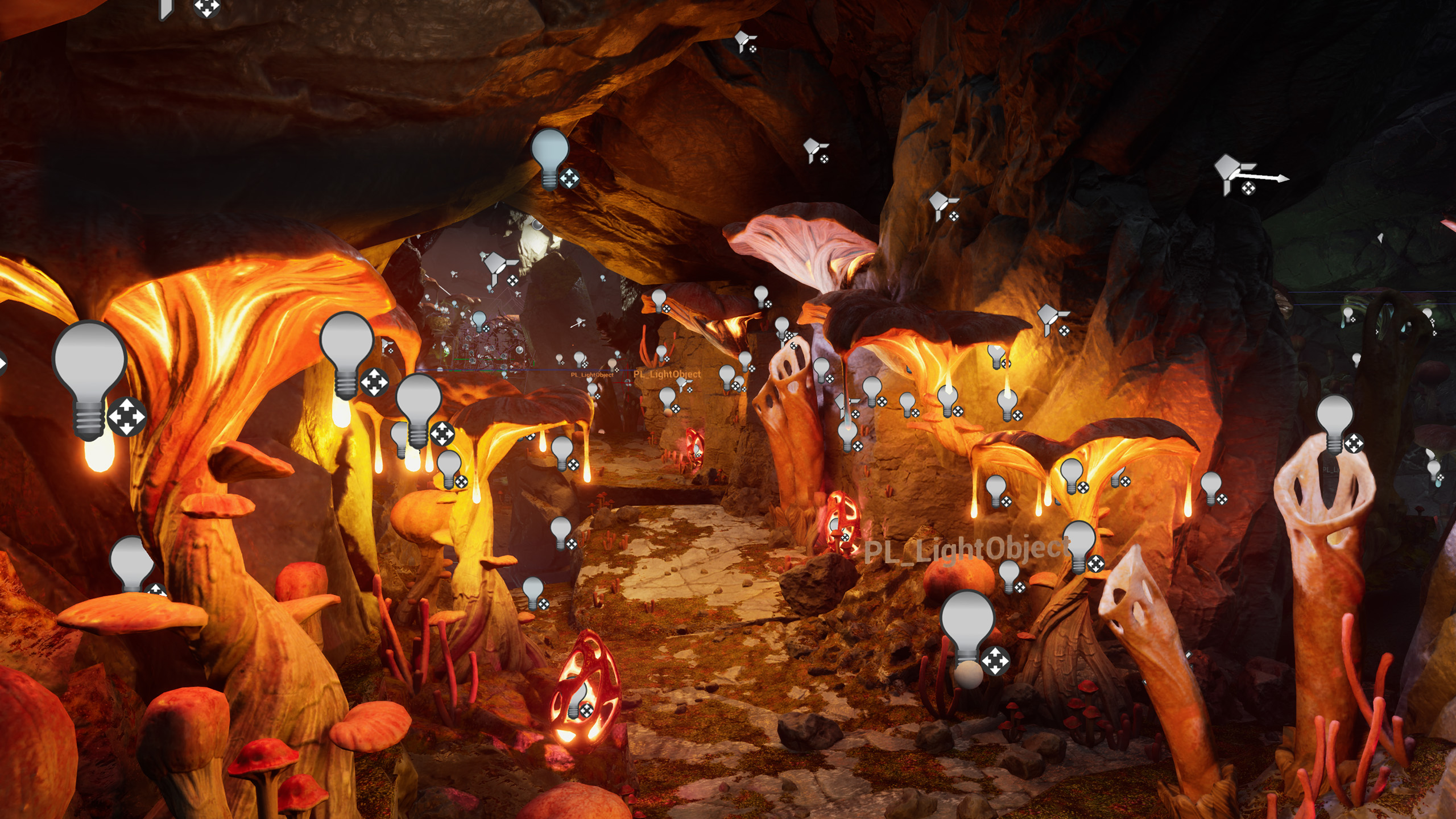
We also made sure our tools and workflows evolved to match this new level of flexibility. Custom tooling allowed us to manage large numbers of lights more effectively, while features like Actor Sequences reduced the reliance on engineering support, enabling artists to take greater ownership of implementation.
This experience has shown us that the NSSD, NFRU, the new features of Unreal Engine and new workflows used in Neural Dawn will have a significant impact, especially for smaller teams. By reducing technical bottlenecks and streamlining iteration, teams can move faster while still achieving a higher level of visual quality. The gap between ambition and feasibility becomes much smaller. NSSD and NFRU are just the beginning, and we’re excited to use new resources as they become available in the Neural Graphics Development Kit to further explore the possibilities on mobile.
Ultimately, the most important outcome of Neural Dawn is not any single feature or technique.
It is the shift in how developers can think about mobile games, from constrained versions of larger experiences to platforms capable of supporting rich, dynamic, and visually striking worlds in their own right.
Unlocking that potential will depend on more than just technical innovation. It requires strong partnerships, thoughtful integration, and a clear focus on how those tools can support real creative goals.
For studios looking to push the boundaries of what’s possible on mobile, the opportunity is no longer just to optimise. With a strong partner supporting you, the next step in mobile gaming is to reimagine.
Get in touch to discuss your next project.