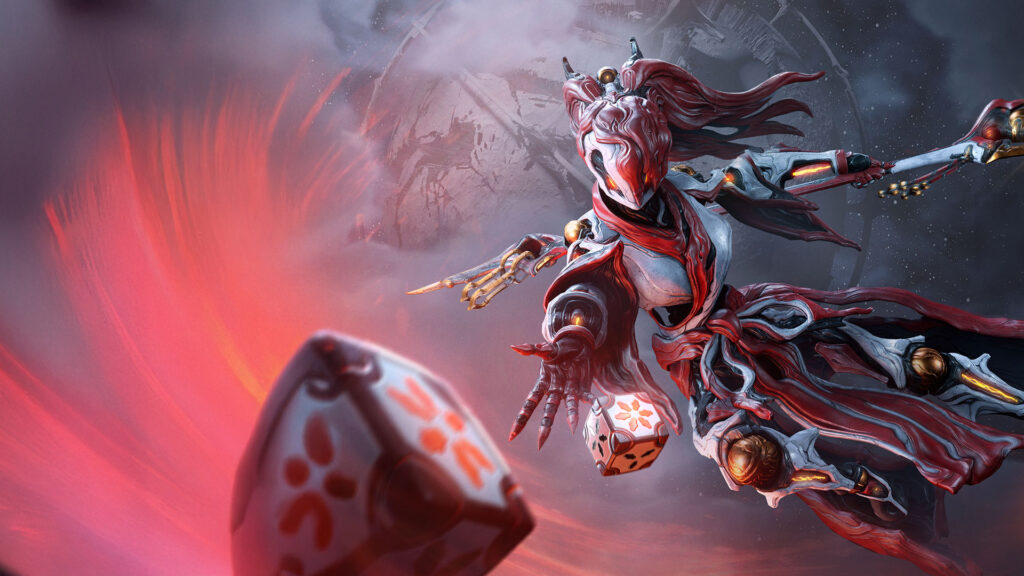

A Storied Design: Tabitha
When we talk about innovative game mechanics, the conversation often focuses on scale or technology.
Bigger worlds, more realistic graphics and increasingly complex systems tend to dominate discussions about what pushes the medium forward.
Some of the most interesting challenges in video game narrative design though, are less visible than that. They emerge when a team tries to build a type of experience that doesn’t yet have an established production process behind it.
A Storied Life: Tabitha is one of those games.
At the centre of the game is a memoir-writing game mechanic that allows players to shape parts of the narrative themselves. As players progress, they collect objects, decide what to keep, and use those items to influence the words and phrases available to construct passages of the story.
It sounds relatively straightforward when described at a high level, but building a system like that required our team at Lab42 Games to solve a series of creative and technical problems that were closely intertwined.
Terry Goodwin, Lab42 Games Studio Co-Director explains: “We had to create a framework that gave players freedom to express themselves while still ensuring the narrative felt coherent, emotionally readable and intentional. That changed the way the project had to be approached from the beginning.”
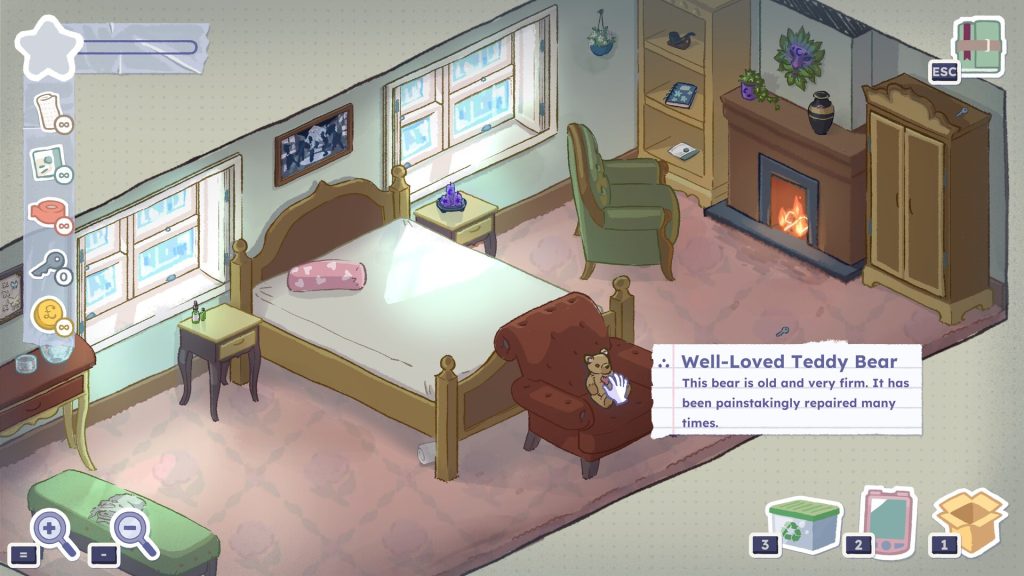
Bedroom Environment
Building a Narrative System
Traditional narrative pipelines in games are usually fairly linear. Writers define scenes, dialogue and pacing, while art, design and engineering teams support those decisions through implementation. On A Storied Life: Tabitha, however, the narrative system itself is part of the gameplay.
That meant we couldn’t think purely in terms of authored scenes. We had to think structurally about how language, objects and player choice interacted with one another.
We needed a system that sat somewhere between player freedom and controlled storytelling.
If players were allowed to construct anything, the narrative could quickly lose coherence. But if the system became too restrictive, that sense of agency disappeared.
What we decided on in the end, was a framework built around patterns of words and phrases rather than isolated nouns or adjectives. This system guided players toward coherent outcomes without making those boundaries feel obvious.
Objects in the environment were no longer simply decorative assets or props used for worldbuilding. They became part of the narrative system itself. A piece of furniture, for example, might simultaneously contribute to environmental storytelling, gameplay progression and language construction.
As a result, video game narrative design, environment art and systems implementation became tightly connected throughout development.
Designing a memoir chapter involved more than writing dialogue or planning level layouts independently. We had to think about emotional tone, object placement, phrase generation and environmental composition together.
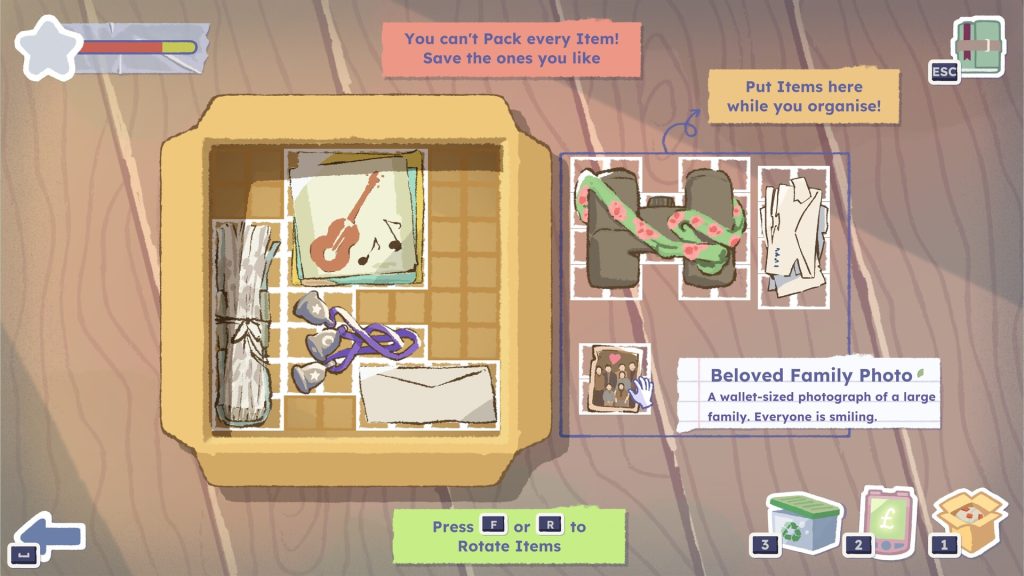
Packing Screen
Creating Tools Around the Creative Process
Tabitha relies on large amounts of interconnected narrative and object data, all of which needed to remain synchronised across the different disciplines. To manage that complexity, we developed a bespoke “Memoir Tool” that centralised memoir structures, phrase categories, object data and narrative logic into a single tool.
Without that tooling, maintaining consistency across the project would have become increasingly difficult as development progressed.
This is often one of the less visible realities of experimental game development. Innovative mechanics usually require new forms of production infrastructure alongside the creative ideas themselves.
![A screenshot from A Storied Life: Tabitha showcasing the memoir screen where players must use the words created by the items they have decided to keep to restore a damaged memoir missing words. Text above the notepad featuring the pictures of the items alongside their word choices reads 'Use the words and phrases to tell Ms Kettlewell's story'. The half written memoir to the right reads "I don't recommend getting old, but I suppose it beats the alternative. At least I have aged GRACEFULLY. I can no longer RUN WITH my [blank]. So I spend my days [blank] and reminiscing about the past." At the very bottom of the screen text reads 'page 2 of 2'.](https://www.sumo-digital.com/wp-content/uploads/2026/07/ss_4ee5ee5f035b2879a1e32ab604b5dcc9ea2a9003.1920x1080-1024x576.jpg)
Memoir Screen
Player Freedom within a Rules-Based System
One of the clearest examples of this came when we approached localisation.
The memoir-writing system supports 13 languages while also allowing players to switch languages dynamically during gameplay. On the surface, that sounds like a technical challenge, but in practice much of the complexity came from the design of the system itself.
Different languages structure meaning differently. Sentence order changes, adjective placement changes and grammatical rhythm changes.
If the underlying framework wasn’t designed carefully, the challenge of localisation would become a problem.
That experience reinforced an important reality about game development: many technical challenges begin as challenges for design.
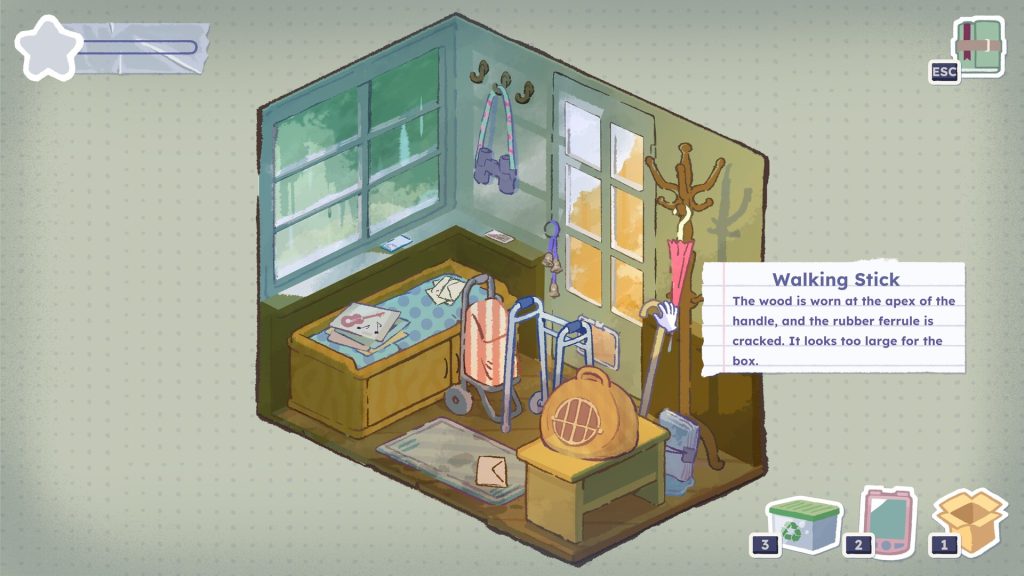
Porch Environment
Knowing Where to Limit Risk
At the same time, the project also benefited from knowing where not to innovate.
The team still needed to ensure the game remained readable and performant across Nintendo Switch hardware, particularly on the smaller Switch Lite screen. That required careful balancing around asset quality, loading performance and visual clarity.
But outside of the systems that genuinely differentiated the game, the project intentionally avoided unnecessary technical risk. That restraint was important. Projects built around unconventional ideas can quickly become unstable if every area of development is treated as an opportunity for experimentation.
In many cases, successful innovation depends as much on careful scope management as it does on ambition.
The team also faced the challenge of optimising the game for the Nintendo Switch Lite, which was small both in terms of physicality and hardware. The memoir-writing interface needed to remain clear readable on the smallest supported screen, while also keeping it looking great on the same platform on a regular Switch when docked.
This balance required a careful optimisation of assets, memory usage, and loading times, to keep the game running smoothly on a range of Nintendo devices.
These challenges demonstrate the breadth of expertise and problem-solving ability required to bring Tabitha to life.
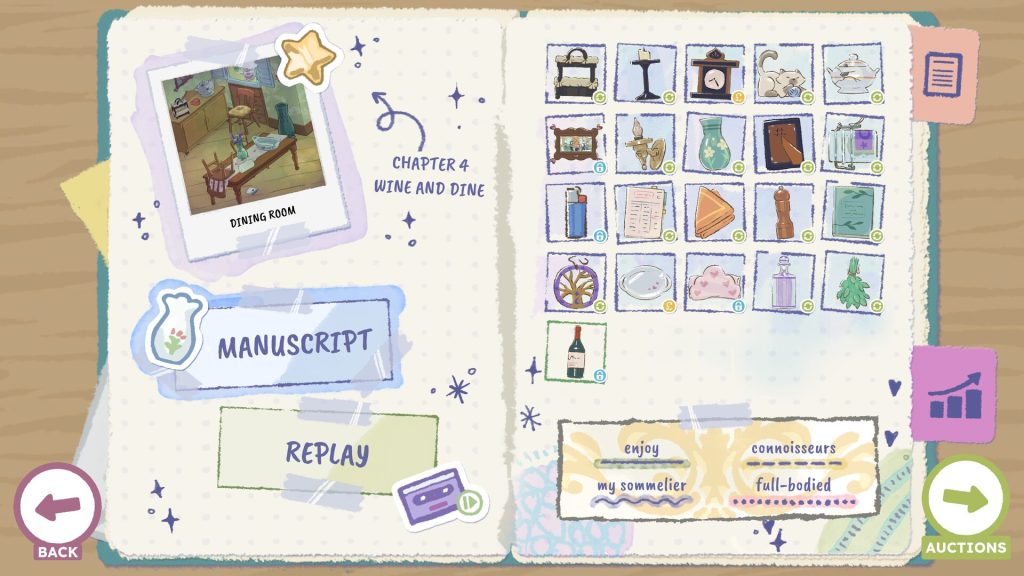
Summary Screen
What Projects Like Tabitha Say About Modern Game Development
For Lab42, A Storied Life: Tabitha represents a broader evolution in the studio’s work.
More broadly, the project reflects how game development continues to become multidisciplinary.
The boundaries between Narrative Design, Engineering, Art Direction and Systems Design are becoming less distinct, particularly on projects experimenting with new forms of interaction and storytelling.
And increasingly, some of the industry’s most interesting innovation is emerging not from making games bigger, but from finding new ways to give players a meaningful role in shaping the experience itself. Entirely new tools and technical solutions when a creative vision demands something that no existing framework can provide.
Lab42 Games is part of Sumo Digital Ltd, providing full-game development for indie, mobile, and emerging technology titles.
Get in contact via their website to discuss how Lab42 Games can support your IP.