The horror genre naturally gives game developers huge freedom of expression, tapping into a primal emotion shared by all. It allows development teams to subvert expectations, play with gaming convention and develop rich, narrative-driven stories that make the inevitable scares all the more impactful and horrifying.
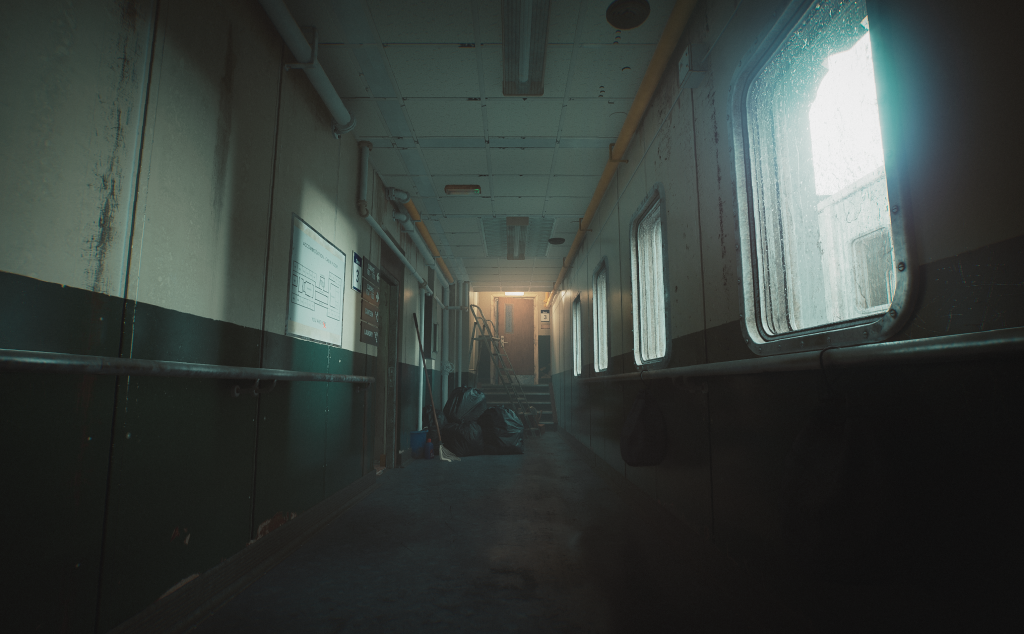
Over the years, Sumo has created a dedicated team in the evergreen horror genre, reaffirming our love for the mysterious and macabre. Whether it’s the pin-drop tension of The Texas Chain Saw Massacre, escalating to heart-pounding chase sequences punctuated with violence … or exploring the sinister, foreboding and claustrophobic corridors of a Scottish oil rig in Still Wakes The Deep, trying to unravel the horrifying catastrophe unfolding before your eyes. Horror games have something to suit all playstyles.
Some of our resident experts, Steve Kirby (Lead Game Designer), Kelvin Moore (Project Design Director) and Sven Brinkman (Senior Level Designer) share their thoughts, lifting the veil on some of Sumo’s entries into the genre, and maybe… just maybe… make it out alive!
[Image: Still Wakes the Deep 2024.]
THE SET-UP: Psychology of Horror
Horror games are so innately appealing to players due to a diversity of subject matter and setting. Whether encountering an alien species or dealing with the eternal terror that can manifest in the human brain, games can exploit a player’s curiosity and trepidation with a huge range of techniques. Level design, artistic themes and clever audio can deliver the most extreme jump-scares, narrative design, character development and voice actors can provide an eminently relatable, internal psychological terror and game design can drive the player to directly engage with their deepest fears. Our developers have become masters in combining all these elements to deliver unforgettable experiences which traumatise and shock but are ultimately exhilarating.
But what is fear and how do our brains and bodies interact with it?
For our teams to craft memorable horror games, they must delve deep into the psychology of the human mind asking the questions: Why we are afraid? How is fear triggered? Where the line is between enjoyment and discontent.
Our teams understand fear is defined as, “a basic, intense emotion aroused by the detection of imminent threat, involving an immediate alarm reaction that mobilises the organism by triggering a set of physiological changes”.
In short, fear is the way we process a perceived threat, how our bodies unconsciously react to these stimuli and ultimately, the involuntary physical response we then have.
As part of this fear response, adrenaline is produced elevating our senses, preparing us for fight or flight. This primal instinct is what gives us the post-scare rush. The large adrenaline dump is converted to dopamine, triggering a euphoric feeling of relief and safety.
The interactivity of horror games can increase and enrich these responses by handing the player responsibility over their actions, where every decision they make has consequences. This not only levels up those physical responses but also plays into predictable gameplay behaviours to allow our teams to control the pacing and timing of player reactions.
Here lies the fundamental skill and craftsmanship of creating a horror game. When, where and how often do we push players to the limit without crossing the line? These are questions the teams ask on a day-to-day basis.
DESIGN FUNDAMENTALS: What Makes a Good Horror Game?
Horror games are a place for creativity to thrive.
With the emergence of new technologies, software packages and design tools, the palette of options to deliver new experiences grow year-on-year. As the technology improves, so does our teams’ understanding of what is achievable. They can create more immersive, detailed worlds, build more believable characters that drive emotionally driven stories on par with Hollywood and introduce sweepingly complex soundscapes to capture mood, tone and environmental subtleties.
But how do they decide which tools to use and when to create and unforgettable horror game?
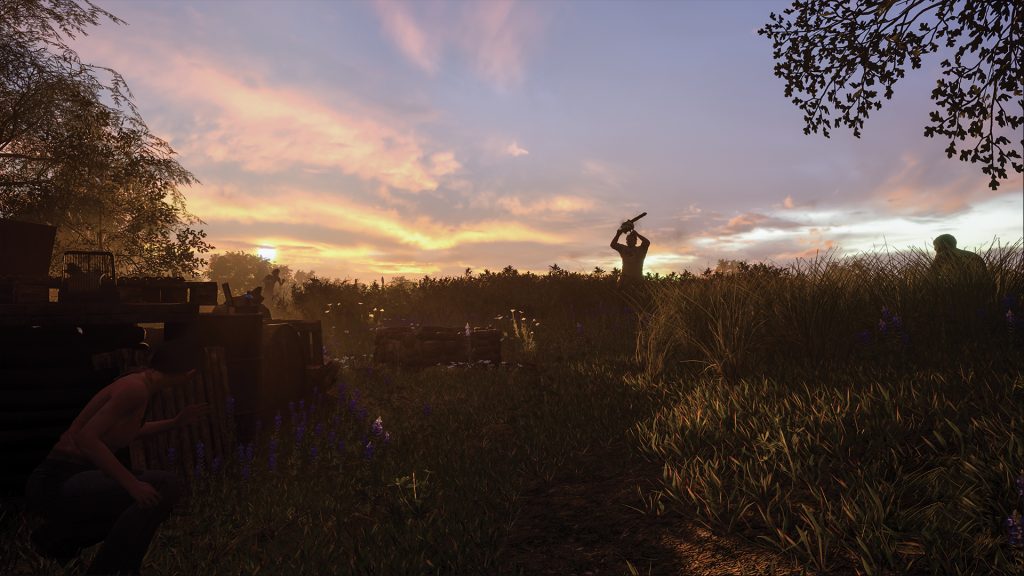
Atmosphere: “If you can create an atmosphere that gives the player an uneasy feeling I the pit of their stomach, then you’ve got a great starting point. When making The Texas Chain Saw Massacre, everything came to life as soon as we added details like audio, lighting and ancillary animations. The atmosphere was palpable. In The Texas Chain Saw Massacre, the atmosphere is heavy: it hangs over players regardless of which side you’re playing for. There are things at stake and you need to fight to survive.” – Steve
Building Tension: “One of the ways we increased tension in Still Wakes the Deep was by creating scenarios where the player is made aware of the monsters while in a safe place. Ultimately, players arrive at a decision point where they have to exit their hiding spot and engage with the monster, with no way back to safety. At that point, they have to commit, physically entering the space on their own volition. This formula can then be used as a tool to create tension, even when these encounters never materialise.” – Sven
Near-Miss Moments: “One of the things that keep players coming back is the feeling of being so close to escape before disaster. These close encounters or “near-miss moments” provide a goal they know is achievable, but being put in a stressful situation can cloud your judgement and influence your fine motor skills. Those small reactionary missteps like tripping on an obstacle, taking a wrong turn or making too much noise add extra challenge and a desire to keep trying.” – Kelvin
Pacing: “Some of the most powerful and haunting horror games are the ones that force you to sit in the fear. Games like Creative Assembly’s Alien Isolation wouldn’t be nearly as scary if players were allowed to bolt through every single level at top speed. There has to be a mechanic to slow players down and give them breathing room in an environment with no air. Similarly, the quiet moments in a horror game can be scarier than the big, bolshy executions. Hiding in shadowy silence while a family member passes you by, has all the same breath-holding horror as being chased down the driveway, in my opinion.” – Steve
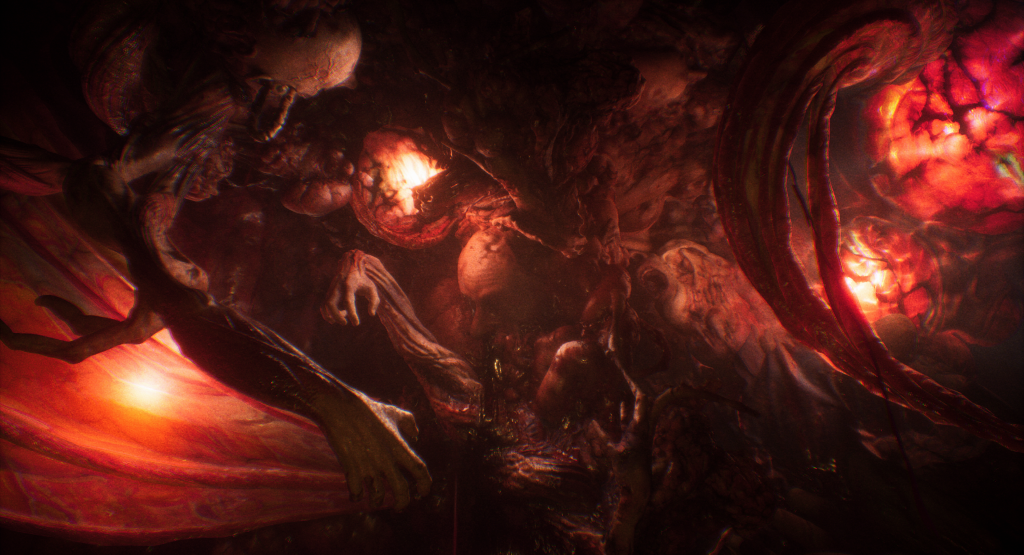
Moments of Quiet: “In Still Wakes the Deep, One of the ways we increased a sense of dread was by adding moments of reflection, or quiet. For example, when you ascend the legs of the rig by lift, in the middle of this colossal spiral of tissue, there’s nothing to do but reflect on, how massive it is, how insignificant you are by comparison and question if there’s anything that you can realistically do to stop it.” – Sven
Consequences: “Part of what makes horror games so exhilarating is that the player is in the driver’s seat and it’s their actions that determine what happens. Games that have little to no consequence don’t have the scare-factor required to keep players on their toes. There are some games that have huge anticipation, but when you meet your adversary, nothing really happens. In Texas, we created consequences for the victims that felt very real and brutal. You don’t just die and respawn, you’re killed and out of the game, destined to watch your teammates struggle for survival on their own.” – Kelvin
[Image: Still Wakes the Deep 2024.]
CREATING A COMPELLING SETTING: Themes of Horror Games
Still Wakes the Deep and The Texas Chain Saw Massacre may sit at different points on the ‘horror game’ spectrum, a single-player, narrative game vs a multiplayer, stealth action game, but they have plenty in common. Kelvin, Steve and Sven discuss some of the common techniques used that are prevalent in both titles.
A big feature of the horror genre is gore but how much is too much, and when should you stop?
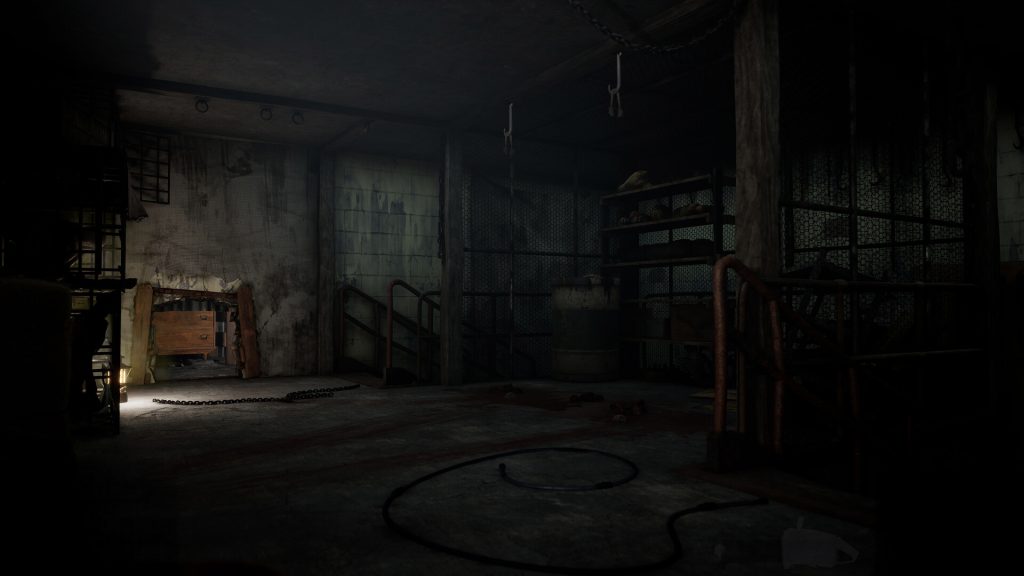
Kelvin mentions: “People think of the original Texas Chain Saw Massacre film as extremely gory, but it’s more of a tense, psychological, attritional movie. We were committed to keeping that same feeling in the game and used gore as a storytelling device, not as a shock technique. Each of our maps tells a story with the gore. There’s little to no gore outside, elevating the sense of safety and escape but as the player ventures deeper into the bowels of each location, the tension builds along with the ichor. Forcing the player down into these locations, builds that unease and trepidation. As dark secrets are uncovered the player has to deal with the heightened sense of menace and threat.”
In all horror games we see that balancing act. You have to ensure the threat isn’t meaningful but also that it not overwhelming.
“In Texas, we wanted players to feel like they had control regardless of which team they play for so we equipped them with abilities to do just that.” said Steve, “The Family utilise weapons and strength, whereas the Victims are given attributes to increase their survival skills and agility, such as lock-picking, hiding, shoulder-barging and sprinting. Attack vs defence, hide vs seek.”
Although presenting wildly different mechanics, both Still Wakes the Deep and The Texas Chain Saw Massacre are rich with themes of humanity, family and of fighting to protect what is precious.
Sven said: “While Caz is alone for most of the game, he still retains a sense of camaraderie and connection with the other people on the rig. These relationships are forged in this insane survival situation, where people come together to help each other, even in the face of incomprehensible fear. This obviously taps into player emotions, relationships and personal experience, compromising their ability to just disregard these characters, even when they aren’t on screen.”
Steve added: “You might not think it, but The Texas Chain Saw Massacre film is all about a family defending their home. Albeit they have some interesting methods and dietary choices, but they are protecting each other, their way of life and their home from intruders. They are not killers without cause.”
Horror games are also excellent at prying into our brains and exploiting our fears.
The setting was crucial in facilitating the fears and phobias we wanted to play around with.
The fear of isolation of being on an oil rig in the middle of the stormy north sea, fear of being trapped in an increasingly inhospitable environment, the claustrophobia of the tight corridors and compact structure, the submechanophobia of the sinking rig, fear of the dark when all the light you have is a malfunctioning head-torch, fear of heights as you’re forced to shimmy along the side of the rig high above the waves. The Oil Rig was the key to being able to dig into each of these fears in an uncontrived way.” – Sven
Ever had that dream where your teeth fall out? That’s a fear of losing control! Kelvin added: “In a lot of ways, The Texas Chain Saw Massacre is unpredictable. It’s multiplayer which opens up an infinite number of possibilities and there are no pre-defined scares. Each match has an organic, player driven outcome. In the heat of the moment, you might make a split decision that you wouldn’t have otherwise. We take you out of your comfort zone, and into a high-pressure environment.”
THE EFFECT OF STREAMING: Horror Games as a Spectator Sport
At any moment, you can find thousands of gamers live-sharing their terrifying experiences with the world. Streaming services like Twitch, Youtube and even social media platforms, now allow you to tune in to vicariously live out your nightmares through others, at any time of day or night.
Global favourites such as Behaviour Interactive’s Dead By Daylight or indie darling, Kinetic Games’ Phasmophobia have reached huge new audiences this way and is something that Still Wakes the Deep and The Texas Chain Saw Massacre have also benefitted from.
The virality of our titles is not by chance, as our developers heavily consider the social elements of a game setting, mechanics or interactivity throughout development. The use of set-pieces, tense chases, compelling characters and surprising scares are all tools in the developer’s armoury.
Seeing our favourite streamers experience the games we make and share their live, unfiltered reactions with audiences, gives our teams the motivation to continue creating these games.
And it’s not just players or developers who know the value of streaming. Secret Mode, publisher of Still Wakes the Deep, recently commented on the impact these content creators can have.
“The horror genre is perfect for video creation. Many people love watching content creators experience horror games for the first time. Over many years now, we’ve seen content creators offer incredible reactions to horror games, which is in itself highly entertaining.
In some cases, horror streams can also act as a window into the genre for viewers who are interested in the genre, but don’t feel comfortable enough to play first-hand.”
PERENNIAL GROWTH: The Ongoing Success of Horror Games
Year-on-year, the horror genre continues to thrive, with gaming franchises expanding on their success. These IP command such an audience that many are now considered commercially and critically successful horror franchises across games, film and TV. Examples include Five Nights at Freddy’s breaking box office records across the globe and The Last of Us TV show taking the #1 spot for TV show of 2023.
The global adoption of Halloween also provides games with a huge boost to downloads, purchases and streaming stats. In November 2023, gamesight.io analysed Twitch viewership statistics for horror games during the Halloween season and found that on October 31st alone, over 3.2 million hours of horror games were streamed. That’s more than 133,000 days of content in a single day.
Looking ahead, everything points to the future being covered in blood, filled with screams and we can’t wait to be a part the nightmare.
To find out more about how Sumo Digital’s expert teams are bringing horror haunts and devilish delights to life in a range of ghoulish games, please visit the Services page.
Still Wakes the Deep will launch on 18 June 2024 for Xbox Series X|S, PC, and PS5. It will also be available with Game Pass for console and PC.
The Texas Chain Saw Massacre is now available on PlayStation 4, PlayStation 5, Xbox One, Xbox Series S/X consoles, Steam and Game Pass.