The handheld gaming space enters a new chapter in October 2025 with the release of Xbox’s ROG Ally and Ally X. This platform is the latest in a fascinating series of devices stretching back to the dawn of gaming that aim to bring convenience and fun straight into the hands of players.
Understanding the power of pocket-sized platforms has been a fundamental aspect of Sumo’s development history since 2003. We were there, in the launch window of Sony’s PSP, with both port-plus and original titles: Virtua Tennis: World Tour, Go! Sudoku and Race Driver 2006, among many others throughout the console’s lifespan.
The Nintendo 3DS years saw us innovating with touch-screen controls, maxing out framerates and making the most of early on-line capabilities with Konami’s New International Track & Field, Disney’s A Christmas Carol and SEGA’s Sonic & All-Stars Racing Transformed.
The crowning glory though, was when we (very) briefly bumped Zelda: Breath of the Wild off the top of the Nintendo Switch charts with Snake Pass as an almooooost launch title for the new hardware.
It’s safe to say that getting in early and mastering the technological capabilities and unique aspects of the hardware is a key skill for Sumo. We love handheld gaming, which is why we’re so excited for the ROG Ally.
A Handheld History
Since Mattel’s Auto Race in 1976, handheld devices have captured the imagination of gamers.
Throughout the 80s, technology gathered pace; moving beyond Nintendo’s huge Game & Watch series to devices that more closely represented the home consoles of their time.
The future truly arrived in 1989 with Nintendo’s Gameboy, which served as one of the most pivotal moments in handheld history, as we saw its popularity sore all the way through that decade, far surpassing contenders like the Lynx, Game Gear and Turbo Express, as great as they were.
And how many of us so desperately wanted a NeoGeo Pocket at the time?
The new century heralded huge advancements with Sony’s PSP, along with new incarnations of the Gameboy via the DS and 3DS. Handhelds had become a core weapon in every gamer’s console arsenal.
The introduction of smartphones in the late 2000s marked yet another major shift in the space. Games became a key selling point for these new devices, with titles like Angry Birds, Fruit Ninja and Doodle Jump proving wildly popular and culturally significant, introducing millions of smartphone users to the joys of gaming on the go.
Suddenly, the perception of handheld gaming had changed. It was no longer for nerds. It was for everyone. The barriers were down.
When Nintendo launched the Switch in 2017, more new ground was broken. Playing games on the move AND your TV was suddenly a seamless experience that completely broadened the possibilities for any time/anywhere accessibility. Now we have the Switch 2. And Valve’s Steam Deck.
And now, too, the Xbox ROG Ally.
With machines as powerful as that in your hand, playing virtually any game on the go is now a reality.
That’s why Sumo’s putting all our years of innovation, expertise and success to good use by helping our partners plan, develop and execute their ambitions for this new dawn for handheld gaming.
And this means serious business. Research from Omdia estimates 2.3 million PC gaming handhelds will be sold globally in 2025. This will represent growth of 32% from 2024, when 1.7 million units were sold. The research goes on to forecasts 4.7 million PC handhelds will be sold annually by 2029.
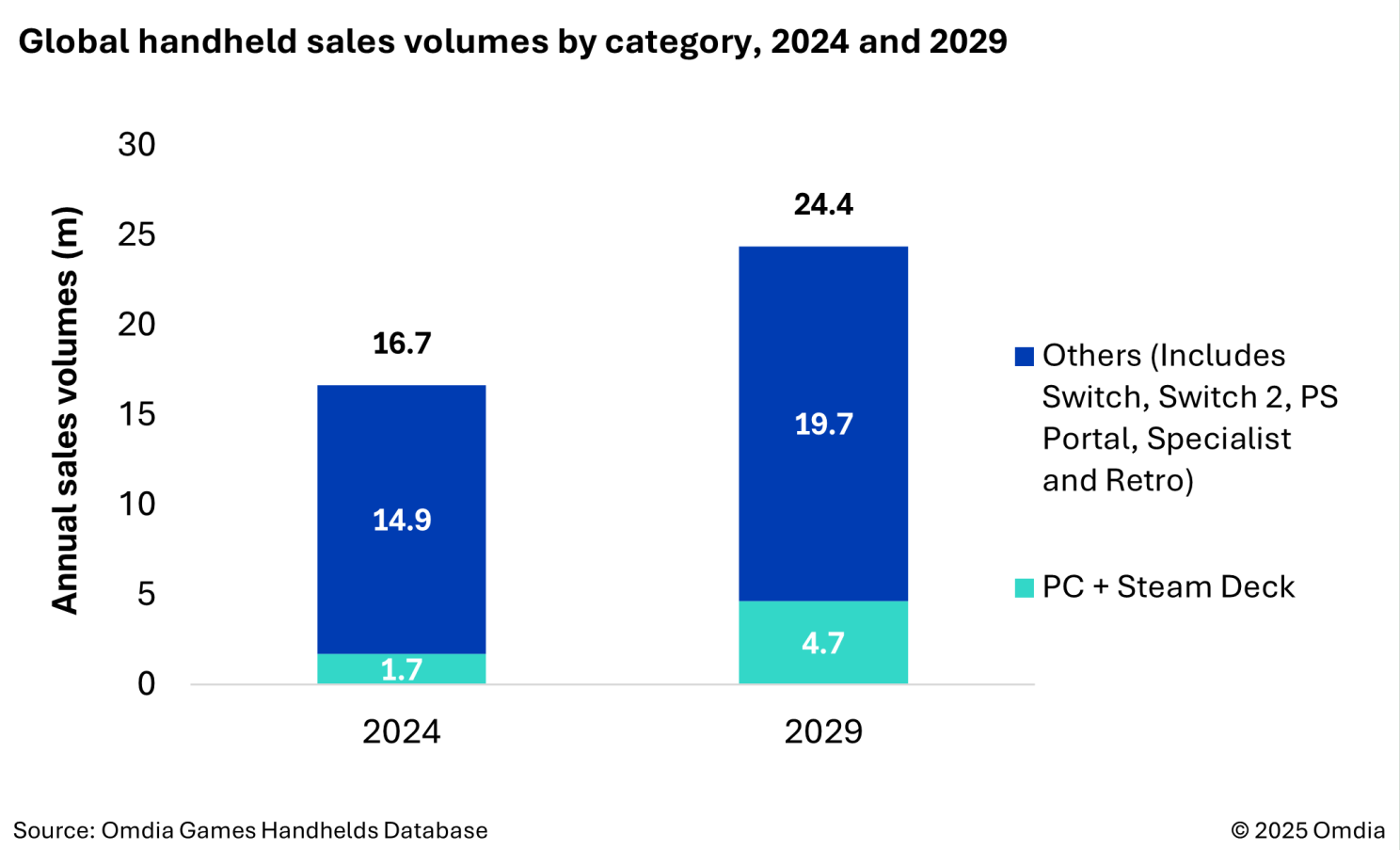
[Image credit: Graph from Omdia’s article ‘2.3 million PC gaming handhelds will be sold in 2025’ which forecasts sales of 24.4 million units by 2029]
Hands-On With Handheld
We asked a few of our Directors at Sumo to let us know their thoughts and what they consider to be important when approaching developing games for these devices.
This speaks to the key motivation we all have as developers; make it fun. We can only do that by getting under the skin of the hardware as a player. Understanding what the end customer needs, before they realise it themselves, is fundamental to taking an existing franchise to handheld.
Terry Goodwin, Studio Director, Lab42 Games: “Subscription-based services like Apple Arcade and Netflix have given the premium mobile space some breathing room, enabling developers to shake off the perceived need within mobile titles to monetise a little, and often, through IAPs or ads.
In many cases, this has meant ports of fantastic PC and console games to mobile have been much more viable, but with those, sometimes large titles, come a great many technical considerations. Knowing how to aggressively optimise games is even more important for mobile than consoles. The spread of capabilities across mobile gaming devices is enormous, and you want to keep your compatibility list as wide as possible.”
Chris Southall, Studio Director, Lab42 Games: “Mobile gaming continues to grow, with a wide variety of experiences catering for the broadest audience possible. The graphics and processing power in devices also continues to grow, so alongside casual (or not so casual) F2P mobile native games, players now expect AAA quality experiences with the lines being blurred between mobile and console.”
Craig Wright, Technical Director, Sumo Digital: “The team here recently worked on Gears of War: Reloaded for the ROG Xbox Ally. With Microsoft now embracing handheld as a first-class platform, I’m expecting the tools and SDKs we use to improve rapidly, making it easier to test on and target handhelds.“
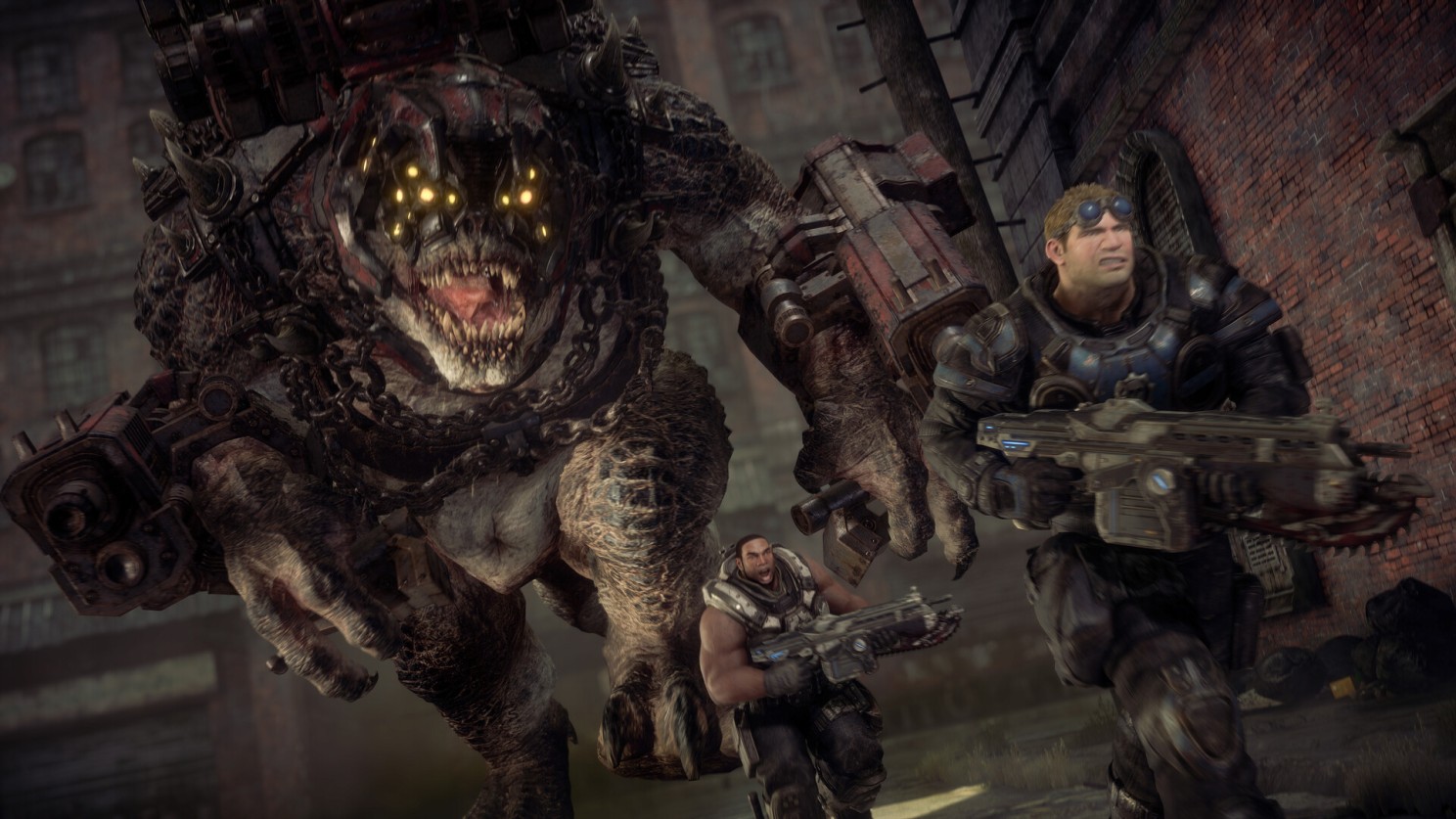
[Image credit: Gears of War: Reloaded Steam Page. Screenshot showcasing an action scene from the game. We worked alongside The Coalition Studio and DISBELIEF to faithfully remaster the original game to more platforms than ever before.]
“I have a soft spot for the original PSP, so it’s great to see more companies embracing the handheld form factor and creating more capable devices. You can’t treat a handheld PC as just a small PC, you need to take both the size and input methods into account. Re-designing or adapting the UI to provide the best experience is a key developmental consideration. Users also expect handheld games to be more console-like than PC-oriented, so default game settings need to give the player optimal performance out-of-the-box.”
Sean Millard, Creative Director, Sumo Digital: “Sumo very rarely takes an existing game and ports it directly to a handheld console. Ever since 2003, we’ve been proud of the way we can pry a franchise open, find the aspects of it that resonate best with the target console and focus on them for the best experience for that situation.
Not every aspect of every game will suit the platform. It’s a fun, creative challenge, to understand which aspects of a title work best and how to represent other key components in new ways, specifically to meet the different expectations of a handheld gamer.
Things like bite-sized objectives that can be completed on a bus journey, more accessibility from the start and a deep and meaningful process of finesse that keeps the player coming back for more, improving their game between episodic snatches of action, all take on a new importance when bringing a title to a handheld console.”
Get in touch to carry on the conversation with us here about handheld gaming, or any game development topic!