What is Porting?
Porting is the process of adapting a game, which has often been designed for a specific platform, to run on another piece of hardware. So whether you’re looking to play Fall Guys on the move with Nintendo Switch, or to get cosy in your living room and relax with A Little to the Left on the big screen, a port unlocks new audiences allowing them to play when, where and how they want.
One team who know plenty about porting, the intricacies of engine architecture and the limitations of hardware are Lab42.
Recently, the Leamington-based studio has been working with some exceptional partners to port beloved games to new platforms. Here, the studios’ team of porting pros break down the process of porting, why they have become so popular and the expectations from audiences of what a modern port should be.
THE FUNDAMENTALS: How to Deliver a Quality Port
Not all games are designed with future porting in mind. When developers start out creating a single-platform game, additional SKUs are only considered after achieving certain levels of popularity or hitting financial targets. In reaching these targets, publishers and developers then decide which platform(s) should be next.
This can create challenges for porting service experts to overcome, due to a lack of consideration for these ports initially. It takes patience, creativity, out-of-the-box thinking and expertise across every discipline to bring a great port to life.
When it comes from turning a good port into a great one, the team at Lab42 have a few ground rules for their projects:
Understanding What Makes the Original Special: Every game has unique features, themes or moments that earn it a treasured place in our game libraries. At the start of any porting project, we’ll play through the original and identify these unique aspects which make it special. Does it have particularly good mechanics? Is the story rich and fulfilling? Is it fun to play with friends? Understanding this upfront means we’re able to work to maintain those elements, so new audiences picking the game up on other devices can experience them.
This even extends as far as bugs. If there are popular glitches or bugs in a game that have become beloved by its players, then we’ll leave them in and make sure they’re replicated for new players to find and enjoy.
Gameplay: It’s important to understand that for every platform there needs to be specific considerations made for how the game will play. If a game has been designed for PC and the publisher or developer wants to take it to a handheld device, then it needs to replicate all the things a PC version can do. Controls need map effectively maintaining accessibility and feel, interactions need to feel natural and predictable, whilst gameplay needs to retain the core values of the original.
Platform Specifics: Part of what keeps new ports fresh, and audiences engaged, is leveraging unique, platform-specific features. Things like Achievement systems, Activity Cards, controller specialisations, haptic feedback, microphones and speakers, all need to be seamlessly integrated into the core experience to ensure players are getting the port they expect.
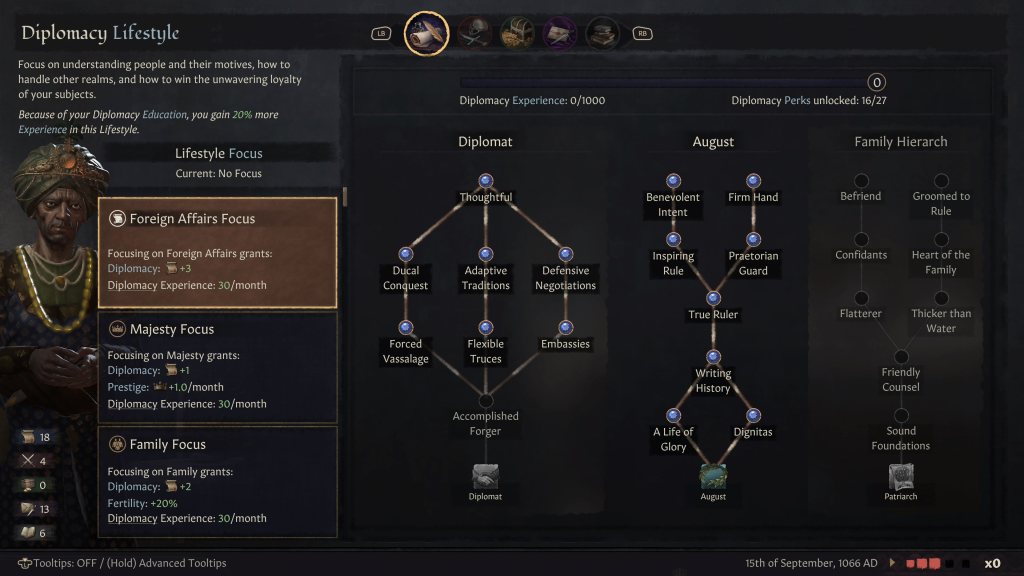
[Image: Crusader Kings III 2020. Controls, UI and UX need to be reformatted to perform effectively on new platforms.]
Accessibility: If you’re taking a game from a large screen device such as PC or console and porting it onto something smaller, like mobile, you need to consider readability, legibility and clarity. This is done through Interface and UI adjustments, which can flex to the new screen type, aspect ratio or size.
Controls: Different platforms have different ways for a player to interact. If you’re taking a game from console to PC, you have to ensure using both the mouse and the keyboard feels natural. If you’re headed to mobile, you have to design and implement an on-screen navigation and control system. It has to feel intuitive and comfortable for the player to use.
Performance: No one wants to play a game that doesn’t run well. A game on PC is going to run very differently to how it would on console or handheld and we do a lot of work initially to identify the lowest performing platform and build up from there. We make suggestions around environments, assets and gameplay elements that need to be optimised and we do everything we can do ensure the visual style and character of the game is maintained and performant.
SUPPORTING OUR PORTING PARTNERS: Tools and Techniques
Porting a game presents publishers and developers with a huge opportunity to reach new audiences and see their game picked up by more players. Searches like ‘best games for console/PC/VR/Switch/mobile’ are always flourishing, with players keen to find out the best games to pick up on their preferred console.
By utilising tools like Google Trends, publishers are even able to see if their game is in demand globally for a particular platform and make informed decisions about which titles to look at porting next. The below capture pulled from Google Trends shows search volumes for H1 of 2024 (1st January 2024 – 30th June 2024) and it’s clear to see that players keep returning to find out which games they should be playing.
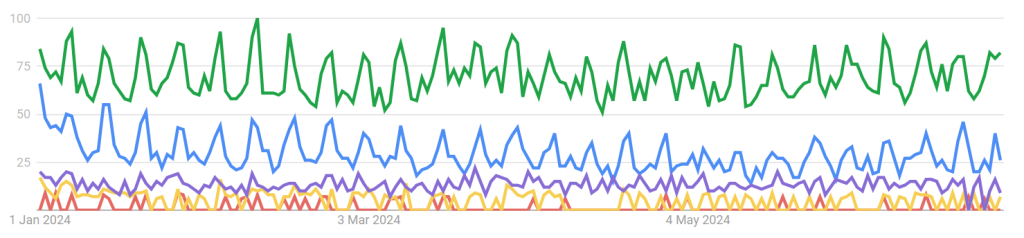
[Taken from Google Trends for searches 1st January 2024 – 30th June 2024. The Search Volume term used is ‘best games for Switch (blue), Console (red), VR (yellow), PC (green) and Mobile (purple)]
This demand from players is just one reason a publisher might look to port a game, it can also be due to popularity of the title upon original release, or that a different platform can offer new and interesting dynamics to the title. Whatever the reason, the goal is always the same: to create the best game possible for players to enjoy.
It’s important at the start of any project to clearly communicate and manage expectations. In identifying and understanding the reasons behind a port, we can outline the platform features that could make a particular port desirable and interesting. Lab42 are committed to ensuring partners understand how various platforms work, the pros and cons to each, the potential amendments that might be required for optimal performance and how ultimately the gameplay can be enhanced.
More often than not, initial discussions lead to a period of exploratory work to identify how the game works, how it runs without any modifications on each desired platform and extensive performance testing on all platforms. Only after this exploratory investigation can the details of the port be nailed down.
The result is often a game which captures all the original charm, features and capabilities of the original game, but optimised for various devices.
Here are some of our favourite projects!
Knowing that combat is such a key feature of Metal: Hellsinger, we transformed the weapons to become physics based. This really added a weight and realism to the weapon behaviour and feedback, so players can really immerse themselves in violent movement, impactful reactions and extreme damage they inflict on enemies.
Specifically, we took the Sword from the PC version of the game, a projectile attack which functioned like a gun, boosting its weight and gravity so players really feel physically connected to each fight.
PORTING TO PC: Enhancing Graphics for Yakuza 0
Originally developed for PlayStation 4 in 2015, we worked with SEGA to bring Yakuza 0 to PC for the first time in 2018 (Digital Foundry’s review right here). Modernising a game for the highest-performance platform (PC) was a very challenging but rewarding experience.
We scaled the game to offer multiple resolution options, enhanced the shadow system, we increased the framerate and fixed all the object glitches that arose as a result. We also adapted the controls from gamepad to keyboard and mouse.
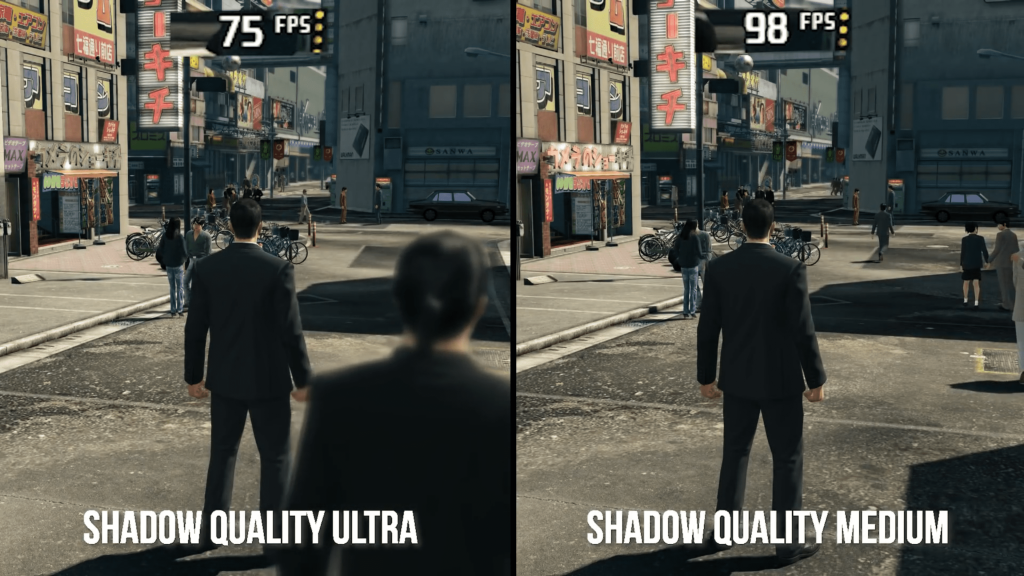
[Image taken from Digital Foundry review of Yakuza 0 on PC 2018. Image Credit: Digital Foundry. Upgrading graphics from PlayStation to PC meant players were able to get a greater breadth of options to suit their display and graphics card. Areas throughout the game received added depth, more lighting and sharper details.]
PORTING TO CONSOLE: Logical Controls for Crusader Kings III
Originally designed for PC, we worked with Paradox Interactive to bring Crusader Kings III to console. The game’s controls lexicon needed to be totally designed to work away from a PCs mouse and keyboard set up and function with precision on a console controller.
As part of this, we had to tweak the UI to make everything easier to access and we redesigned the menu-flow and map so it would feel more natural to navigate.
TOP TIPS FOR PORTING: Best Practices and Areas for Focus
Everyone has their preferred game setup, from eye-watering graphics on PC, getting comfortable with Nintendo Switch on the sofa, playing on a 50-inch TV with a PlayStation or Xbox, being fully immersed in a VR headset or playing games on the go with mobile. Each platform has unique features which can create completely original ports.
Porting to VR: In a VR game, the player is totally immersed in the action and every move they make has real-time, direct consequences. As a priority, the game needs to feel tactile and responsive but also accessible and comfortable. It can be easy to overdesign when you’re trying to translate features from a console or PC version, and that can lead to motion sickness for VR players. Think outside of the box and ways to bring static features to life in ways that aren’t too overwhelming.
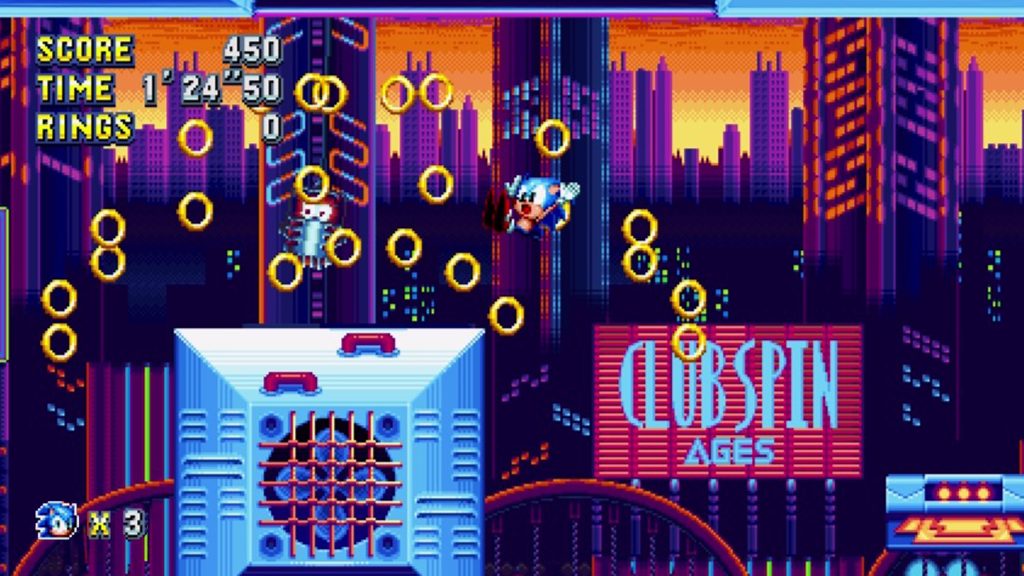
[A screenshot from Sonic Mania Mobile 2024. Porting to mobile is a great way to get a game in front of a huge audience, but with so many devices and operating systems on the market, you have to ensure the UI/UX is scalable, legible and usable.]
Porting to Mobile: Mobile has so many different devices and operating systems on the market, all with slightly varying screen sizes. Controls and UI are the biggest considerations when porting a game to mobile, fitting to extremely limited screen space while being usable, accessible and legible. Design to be scalable between devices, ensure they feel natural, easy to use and have intuitive reactions.
Porting to PC: PC has the capability to be the most powerful platform but with so many variables you have to ensure the game will run smoothly on a broad spectrum of technology. Decide early on your minimum spec hardware and build in scalability to cater for processor, graphics and audio variance. Also consider carefully how you intend to remap controls to from controller to keyboard and mouse.
Porting to Nintendo Switch: As of 2024, the Nintendo Switch is the most popular games console on the market globally. This is a compelling argument as to why publishers want their games on the platform. At the time of writing, the hardware is almost 10 years old meaning serious consideration around memory and optimisation. Switch ports often involve stripping the game right down to core elements and building back up.
Porting to Console: Any console design needs to align with a ‘native’ console experience, the game should feel like it’s designed for that platform. Incorporating the console specific features are key considerations along with making sure any title is first-party compliant. For PlayStation ports you must meet the Technical Requirements Checklist, and for Microsoft and Xbox, the Technical Certification Requirements must be fully catered for.
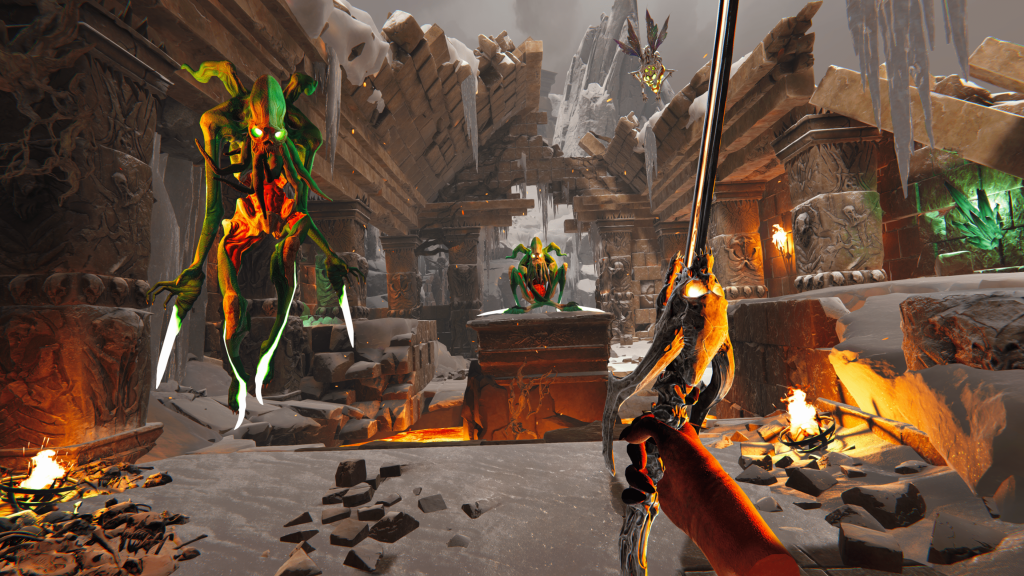
[A screenshot from Metal: Hellsinger VR 2024. Using the unique capabilities of VR, players are able to engage in fast-paced, brutal carnage, where every hit feels believable with transformed weapons, updated physics and more.]
BEYOND THE PORT: Creating New Realms in VR
So, when is a port more than just a port?
With every porting project that comes our way, we ask ourselves how we can give players something new and interesting to experience. For some titles, this might be optimised controls which create a unique experience, or new achievement or reward systems that keep them engage but most recently, it was dialling up the immersion for Metal: Hellsinger.
The original acclaimed rhythm shooter, originally developed by The Outsiders and published by Funcom, is headed to VR.
The Brief: Funcom wanted to bring the experience of Metal: Hellsinger to an entirely new realm, Virtual Reality. The game originally released for PC and console, has an extremely dedicated and enthusiastic audience. Players were desperate for their favourite beat rhythm FPS game to come to the VR platform in an all-new, immersive way.
The Work: We got to work. VR games require a lot of involvement from Game Designers and Level Designers as the position of the player, and the three Cs (Camera, Controls, Character) are totally transformed.
Some of the changes we made included, making previously inaccessible areas of the game explorable, by allowing players to interact with new physics-based objects. We changed the perspective of the camera to put the player in the dead-centre of the action and changed the spawn position of enemies to allow enough time for players to react. VR games are primarily movement based so we focussed combat around that movement pillar, so players get an increased sense of physicality in combat.
The Results: Metal: Hellsinger VR is a completely different game. It’s an evolution of what previously existed, delivering something brand new for fans of the franchise. There are lots of surprises for fans to discover, new ways to play and interact with surroundings and plenty of very satisfying, pulse-pounding gameplay to enjoy.
Want to hear more about how Sumo Digital can transform your game with the power of Porting? Visit our Game Porting page or get in touch.