It’s been over 50 years since players were first introduced to racing games, with the black-and-white, top-down racer Gran Trak 10, released by Atari in May of 1974. Games have come a long way since then, but one thing remains the same, the world loves racing games.
Since that first foray, the racing genre has continued to evolve with gaming technology. From the vast open worlds of Forza Horizon to the high-speed arcade action of Outrun, the authentic simulation of the F1 series to the iconic combat racing of Sonic & All-Stars Racing, modern audiences are spoilt for choice in the current gaming landscape.
For Sumo Digital, racing games are an integral part of our DNA, with our initial contribution dating all the way back to the development of OutRun 2 in 2004. Since then, our teams have gained a reputation for their expertise in the driving world, having worked on some of the biggest, most recognisable IP around.
With that said, let’s fire up the engines and unpick why these games are universally adored.
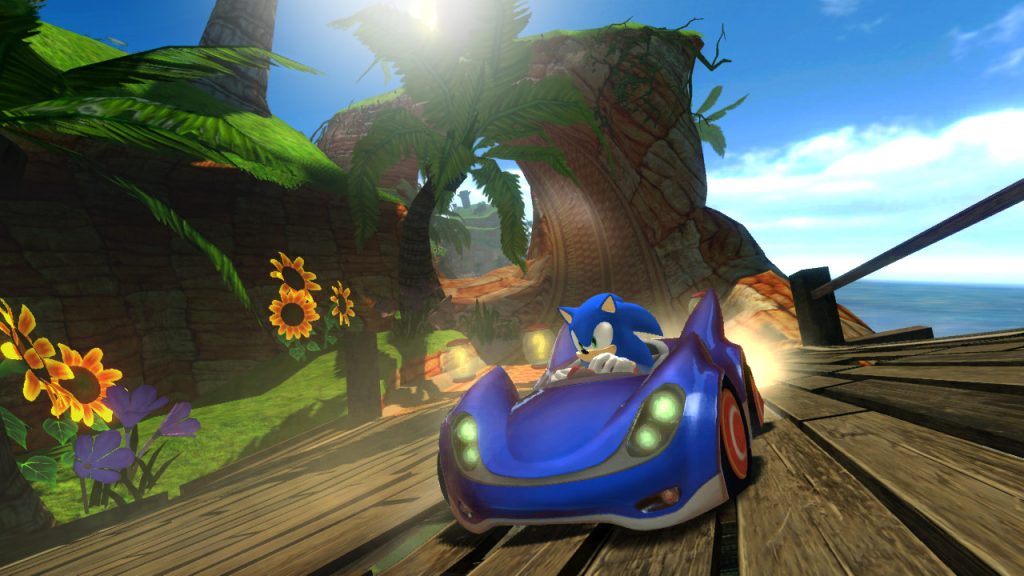
[Image: Sonic & Sega All-Stars Racing 2010.]
HIGH-PERFORMANCE: The Continuing Appeal of Racing Games
Since its inception, the Racing Games Market has increased in size consistently (with the exception of the post Covid slump) every year, to $3bn in 2023 and is projected to grow at an annual rate of over 10% between 2023 and 2032.
As a gaming genre, racing is unique in many ways due to its real-world counterparts contributing massively to their popularity. From F1 to IndyCar, WRC, Formula-E and NASCAR, these vast fanbases continue to expand (motorsports like F1 growth amongst younger demographic), drawn to the fast-paced, ever-evolving technology being made accessible through gaming.
Let’s talk Audiences: Driving is such a universal, everyday activity, that racing games appeal to a hugely diverse demographic. The elegant simplicity of racing games is innately understood; you have to drive fast to come first. This simplicity means the core gameplay experience is immediately engaging and accessible to everyone.
When it comes to Technology, racing games have been central to new platform launches, demonstrating their graphical power and processing speed, as players accelerate down roads or drift round tracks.
Classic examples of this include Wipeout for the PlayStation, Ridge Racer V on PlayStation 2, and Mario Kart 8 on the Wii U and then Nintendo Switch, becoming the best-selling racing game of all time.
Part of the appeal of racing games is the Competition. The emergence of E-Sports, the ability to play online at a touch of a button and the ability to race socially has elevated the multiplayer offering extensively. Some of the biggest growth in the genre has come directly from online, mobile and cross-platform games, with highly polished multiplayer functionality.
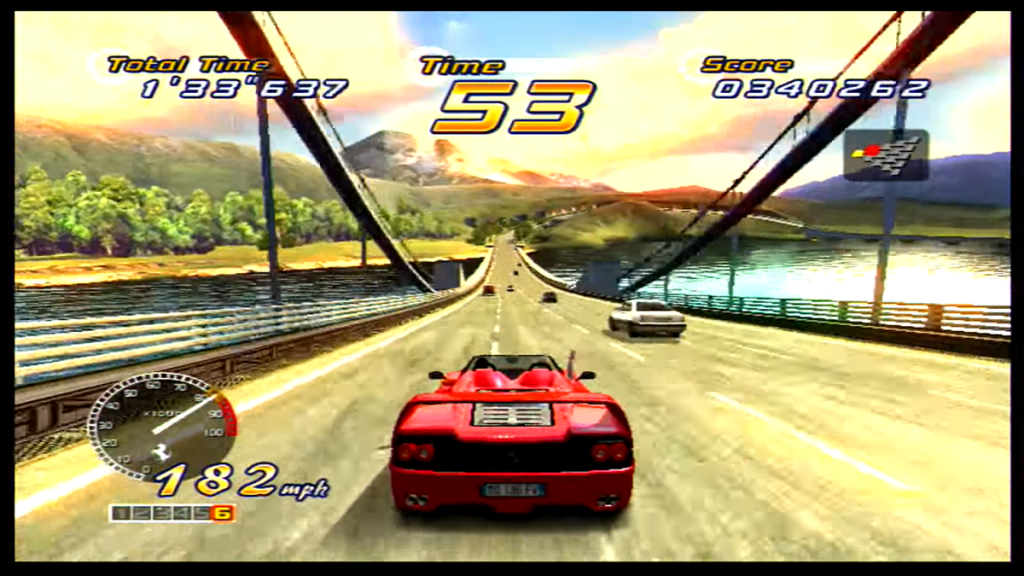
[Image: OutRun 2 2004]
SUMO DIGITAL: We Live Racing.
In our 20+ year history, Sumo has a burgeoning catalogue of racing games.
Originally taking SEGA’s cult classic OutRun2 from arcades to player’s living rooms on the original Xbox, we have always loved making quality racing games.
Someone who’s been there through it all is Steve Lycett, Franchise Development Director at Sumo Sheffield. Here he shares some of his fondest memories of working on racing games:
“We’ve always been prepared to hone, polish and revise until an experience feels right” says Steve. “When SEGA came to us in 2004 about bringing OutRun2 to console, they didn’t believe that a straight port could justify the £40 retail price, but we immediately set about expanding the game into something more for a whole new audience.
We took everything we knew about racing games and their players, incorporating it into the game. We bought in Mission Mode and online play, and spend a lot of time ensuring the driving felt fun, while ensuring the personality of the game remained intact. The game was praised by critics and players alike, and (in combination with our work on Toca Race Driver 2) set Sumo up as a safe pair of hands when it came to racing games.
“We took the learnings from our previous experiences and channelled them into our own racing game: Sonic & Sega All-Stars Racing. For this project, we were able to combine iconic IP, speed, arcade accessibility and inviting visuals to create a ‘tightly developed racer with a lot of charm and character of its own’ (thanks IGN!).
“When you’re making a racing game, there is huge pleasure in finding the perfect mix of camera style, field of view, driving position and speed of motion, incorporating all the little tricks to make players feel like they’re driving fast. It’s an incredibly enduring genre and one that is beloved by players of all ages, abilities and one that I always love returning to. I could boot up OutRun2 tomorrow and it would still feel as good as it always did!”
DRIVING FUNDAMENTALS: What Makes a Good Racing Game
Steve is joined by Chris Southall (Studio Director) from Sumo Leamington to share their thoughts on what a great racing game looks like. Chris has a wealth of experience building racing games including, Colin McRae Rally, GRiD, Stampede Racing and Sega Rally to name a few.
Get the sense of speed right: “In any racing game, you need to give players a sense of speed. No player wants to be going full throttle with a controller only to find their car is idling along at 30. To do this, developers use tricks such as low, wide driving cameras to elevate that sense of speed, or to use audio that imitates engine acceleration, even at top speed. Generally, if it looks fast and sounds fast, you’re most of the way there! It’s also important to make players feel like they understand how to shave off those precious seconds to steer their way to victory next time.” – Steve
A learning curve: “While most racing games have a purity to them allowing anyone to pick up and play, the most enduring ones are those that have a hidden learning curve. This enables players to play their way, whether that for social experiences, perfectionists that want that fastest lap time or someone who just wants to experience the joy of driving. In my opinion, the best racing games are those that encourage you to eke out a few more seconds on every lap.” – Steve
Physics and Handling: “To replicate a pure driving experience, having solid, predictable reactions to player input is a must. Adding depth to how a vehicle behaves on different surfaces or different weather conditions or even after customising a vehicle, gives the player the opportunity to work towards mastery. Furthermore, accurately capturing the real-world feel of different car makes or models, grants driving fans the opportunity to drive their favourite vehicles, which is a key draw to why people love to play them.” – Chris.
Make the most of audio: “While you might think the primary focus of racing games is to craft the perfect controls or handling model, there’s actually a lot of audio work required to create the action. Not only do the SFX for the vehicles have to feel authentic and empowering, the music also has to elevate the action and add to the pacing of the game. No one wants to be listening to piano sonatas while they’re speeding around a course!” – Steve
Capturing Competition: “Part of the appeal of racing games is the desire to perform well and win. Ways to do this include having strong social mechanics so players have the opportunity to share their wins with the world, offering plenty of achievements to provide meaningful targets, or to have collectables or unlockables for players to pick up and discover. Those, combined with progression and variety, form a great foundation for a racing game.” – Chris.
Environments: “The euphoric feeling of driving along beautiful roads laden with stunning scenery and panoramic views is one I personally love to get from a racing game. But whether your game is an open-road driving experience, or a tight track based time trial, it’s important to get the environment surrounding the action right. It has to be the right balance between ambient and action packed, with lots of fine-tuned details for the optimal driving experience including weather, traffic or set-pieces!” – Steve
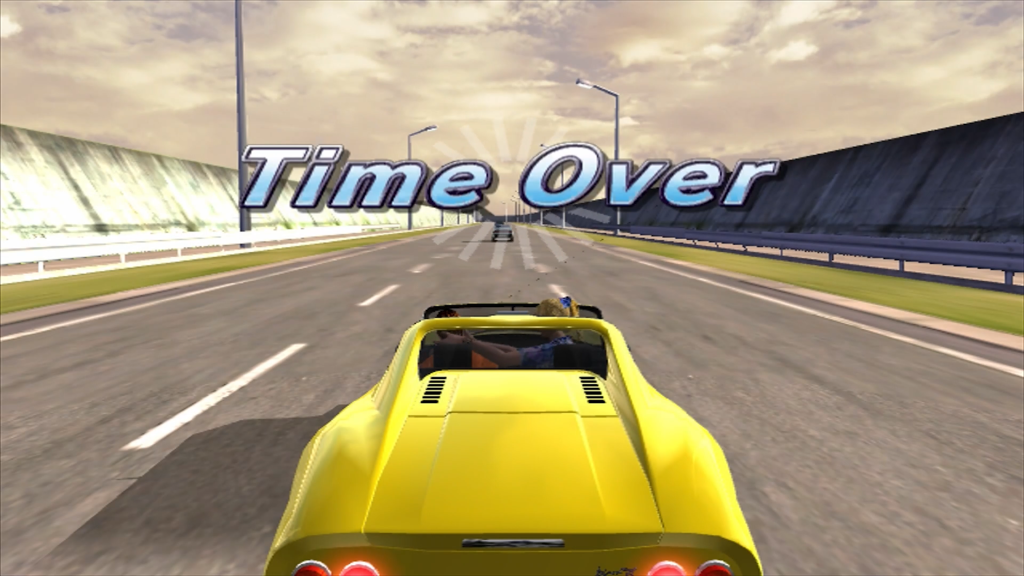
[Image taken from OutRun 2006: Coast 2 Coast 2006]
WHY WE LOVE RACING: The Psychology of Speed.
Since the inception of the automobile in the late 1800s, we’ve been fascinated with cars.
But why is it that we love the exhilaration of speed?
A commonly found personality trait in humans is that of a ‘sensation seeker’ defined by Professor Marvin Zuckerman as the search for feelings and experiences that are ‘varied, novel, complex and intense’.
These people are often first to ride the biggest rollercoasters, leap from planes or race fast cars. This releases more dopamine than normal, creating a higher sense of satisfaction and euphoria, not dissimilar to the experience of playing racing games.
Playing a high-speed car chase or engaging in wheel-to-wheel racing in a game makes our brain respond, heightening the high-speeds and dynamic turns.
The Yerkes-Dodson law best describes the relationship between performance and stress, and racing is one gaming genre which really pushes our nerve and skills. When we’re driving at high speeds in games, our brains are pushing us into a place of optimal arousal and, therefore, optimal performance.
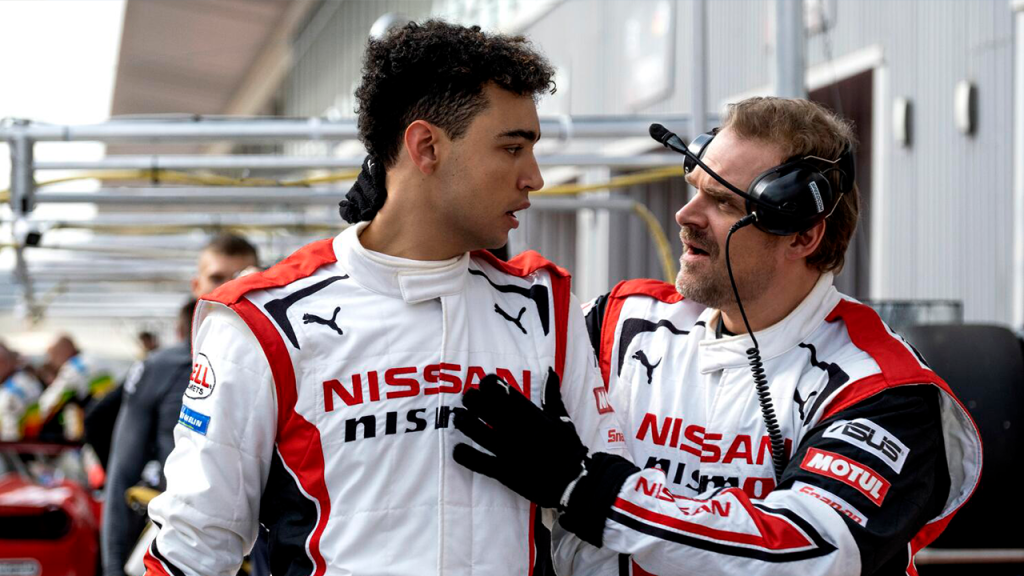
[Archie Madekwe and David Harbour in Gran Turismo (2023). Copyright by Sony Pictures, Columbia Pictures and other relevant production studios and distributors.]
TRANSLATABLE SKILLS: Real World Application
In almost every case, the reflexes, muscle memory and knowledge gained playing games does not cross over to real-life but what about racing games?
For one pro-racer, Jann Mardenborough, the skills gained from competing in Gran Turismo eventually led him to a position on the Le Mans podium. From picking up the game in his early school years, he later went on to land a spot in the GT Academy after finishing in the top 20 in the UK. Jann’s story is one for the history books and has even caught the attention of Hollywood with the Gran Turismo film which released in the summer of 2023.
These benefits do not only apply to pros. A 2016 study in Psychological Science found that playing racing games can actually make us better drivers. The study found that gamers playing these titles have better lane-keeping and visuomotor-control skills, show more precision in their control of the vehicle, have improved hand-eye coordination, quicker decision making and are more confident behind the wheel.
F1 driver Max Verstappen hit media headlines when he shared a video using the Red Bull Racing’s driver simulator. Featuring a full-size rig complete with a force feedback paddle steering wheel, an integrated screen, adjustable racing pedals, AOC gaming screen and a Z906 Ultimate THX Surround Sound speaker system, it is essentially a high-tech version of the games we all play.
And that’s not all: In 2010, the University of Rochester conducted a study that tested games and decision making. Professor of Brain and Cognitive Science, Daphne Bavelier, summarised: “It’s not the case that the action game players are […] less accurate: they are just as accurate and also faster. Action game players make more correct decision per unit time. Decisions are never black and white. The brain is always computing probabilities. As you drive, for instance, you may see a movement on your right, estimate whether you are on a collision course, and based on that probability make a binary decision: brake or don’t brake.”.
So; the next time you race, consider that the skills you learn on the screen may well improve you as a driver in day-to-day life.
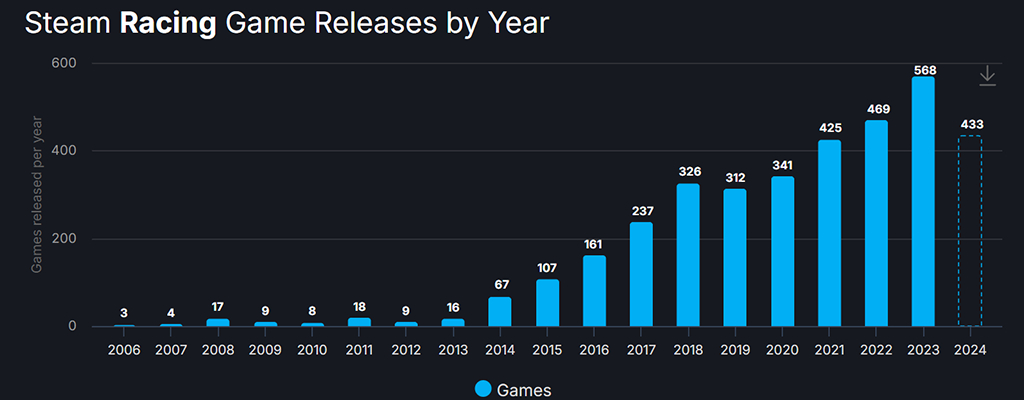
[Screenshot taken from SteamDB for search term ‘Racing Game Releases by Year’, in August 2024. Racing Games have been on a steady incline for the last decade, releasing an average of 310 games per year.]
THE FINISH LINE: What’s Next for Racing Games?
Whilst racing games might have been pedal to the metal for the last 50 years, they show no signs of hitting the breaks just yet. According to Steam DB, 2023 was the biggest ever year for racing games released onto the platform. With 591 high-speed titles drifting into action including Forza Motorsport, F1 24 and Lego 2k Drive.
2024 is already on the way to overtaking last year’s release numbers, with a continued strong release schedule in 2025 including Assetto Corsa Evo, Wreckfest 2, Project Motor Racing and more.
With an ever-expanding catalogue, racing games have proved to be one of the most enduring game genres, with each generation able to find a new way to expose our shared love of driving.
All this driving talk got you geared up? Talk to us about putting the wheels in motion for your next project over on the Services Page.