
Data Driven Games: How Players Help to Make Better Games
Earlier this year, GI.Biz wrote about the era of the perennial game and reported that the lifespan and popularity trajectory of a game is longer than ever. Utilising data from NewZoo’s Gaming Report, they surmised that ‘the average years elapsed since launch of the top ten most-played games in the world [judged by monthly active user figures] was more than seven years’.
Titles including Apex Legends (released in 2019), Minecraft (released in 2011), GTA 5 (released in 2013) and Call of Duty: Modern Warfare II (released in 2022) all dominated the top 10.
So, what is it about these titles that continues to draw players month after month, year after year?
It’s that these games are able to determine what their players want, where they can add new dynamics or challenges and continually fix issues. They do this by bringing in Live-Ops teams and Data Experts to work behind the scenes to crunch numbers, predict trends and analyse player behaviour long after the game’s initial launch window.
But how does this data work impact the lifespan of a video game and its success? What impact do gamers have on their favourite games? What data are game developers collecting? and more importantly, what are they doing with it?
One of our resident experts, Sean Quinn, currently heads up the Live-Ops department and is on hand to break down some of the burning questions around data acquisition and data use.
WHAT IS DATA IN GAMES: A Brief History
Data [in relation to live-service or GaaS games] refers to collected information about how players get exposed to a game, how they play, how they interact with it and how they spend within a game.
In 2024, you’ll be hard-pressed to find a game that doesn’t utilise data in some way. With engines like Unreal and Unity both offering built-in analytics tools, developers can also turn to a huge variety of specialist, off-the-shelf products and services. Increased access means greater understanding with developers, publishers and marketers gaining a deeper insight into the player behaviour.
But it hasn’t always been this way.
Data analysis in games has gone through dramatic changes in the last 20+ years, from pre 2000s where game developers used in-person playtests and surveys to try and understand audiences, through to basic data accumulation from MMORPGs in the early 2000s, all the way up to the deep analytics of free-to-play and mobile games today.
Data Experts have evolved to become Live-Ops teams who specialise in the ongoing management and enhancement of a live service game post-launch.
Over the last two decades, these specialists have worked to utilise tools and technology, hone their craft and grow their understanding and influence in the process of building and maintaining games. Today these live-ops teams are essential for live service success, efficiently and effectively working with player bases to create more sustainable and enduring games.
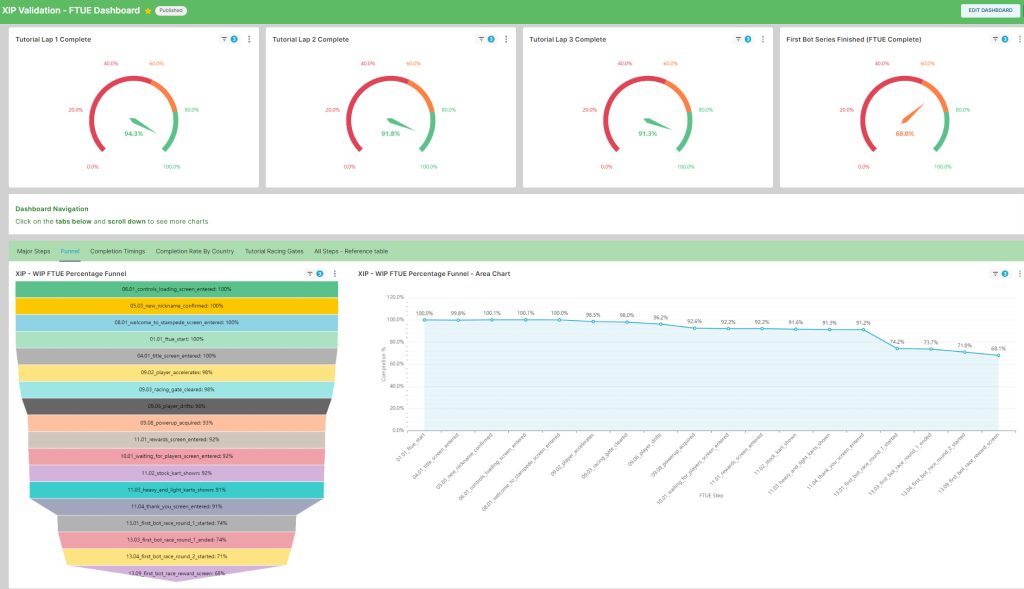
[Data taken from Stampede: Racing Royale during its time in the Xbox Insider Program. This data exposes how often certain ‘events’ are happening within the game, from how many times people land at the final screen, to how often they acquire and use a power up.]
GETTING STARTED: Telemetry Events and Metrics
When we say data, most people think of personal data such as age, gender, territory etc. but actually, data teams are looking to collect behaviour analytics to understand what, how, why and when players are engaging with games.
These are called Telemetry Events, with examples such as:
- Acquisition: How are players first finding the game?
- Technical Performance: How is the game running for its players?
- Interface Usage: How are players interacting with the UI and how long is it taking them?
- Setting Usage: What settings are players using?
- In-Game Play or Behavioural Data: How are players using the game mechanics?
- Monetisation Data: Are players purchasing items? Are they interacting with a storefront?
- Player Sentiment: Using both in-game and external (social media, community spaces etc) data, how are players feeling about the game?
These telemetry events inform a huge range of metrics that teams can use to measure success. These may include:
- Retention: How long do players interact with the game and how often do they come back?
- Heat Maps: Where are players getting stuck on a level? Are there particular enemies or obstacles that are causing them significant issues?
- Peak Concurrent / Concurrent Users (PCU / CCU): How many players are playing at any moment? What’s the maximum number of players that were active at one time and what caused this peak?
Collecting and analysing this data allows informed decisions to be made around potential changes, improvements or fixes to a game. The more the development teams understand of how players play the game and interact with the game systems, the more confident they can feel about the post-launch decisions being made.
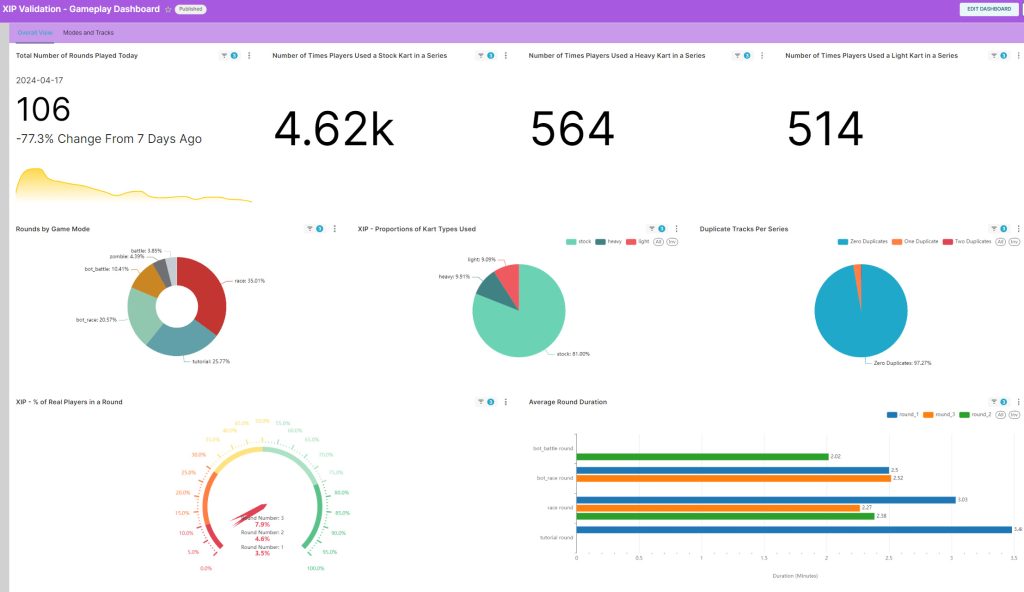
[Data taken from Stampede: Racing Royale during its time in the Xbox Insider Program. Highlights how the team receive and read information. Data which is easy to visually see, means identifying trends is simpler and more efficient.]
THE DATA PROCESS: The Impact of Tech and Tools
The starting point for any data department, is to figure out what you want to know. A sharp, concise and focussed pipeline of enquiry is a great way to produce high-quality data that can make a real impact on your game. A common mistake in these initial stages is to collect too much data, ultimately making harvesting, processing and analysing this information extremely burdensome, even impacting game performance in some instances.
Addressing more complex game design and behavioural questions, teams need a watertight process to capture, aggregate and analyse the data.
For Stampede: Racing Royale, the data team used a combination of services and technology to achieve this, resulting in the following data points within the game.
- A player picks up the game: All players play on real-time servers which collate the actions of a player in relation to where they are in the game. This data is then collected per player and sent to a database.
- The player engages with the game: Each in-game event triggered by a player e.g. logging in, choosing a kart or using a power-up, is recorded in a database alongside anonymised player ID, and a timestamp to allow reoccurring patterns to be identified.
- Player activity is logged and grouped: This data is then formatted, cleaned and stored, then grouped by definition. For Stampede: Racing Royale, data is grouped per minute to give the best indication of how players are interacting and engaging with the game.
- Player data is analysed: Data is loaded into a pipeline tool and database which orchestrates common query patterns. This data is then used to highlight how events impact each other e.g. time between power-up acquisition outlines how often players collect power-ups.
- Common themes and connections: Data analysis software creates these logical connections enabling the data team to access clean, ordered, refined data, streamlining the whole process.
- Numbers translated into visuals: Visual representations of data allow the team to easily assess real-time data providing an overall view of player activity live.
- Live-ops team: Whilst much of the data is processed using technology, the data team’s involvement is crucial. A knowledgeable live-ops team is extremely valuable to add gameplay context, real-world experience and common sense to the information being gathered.
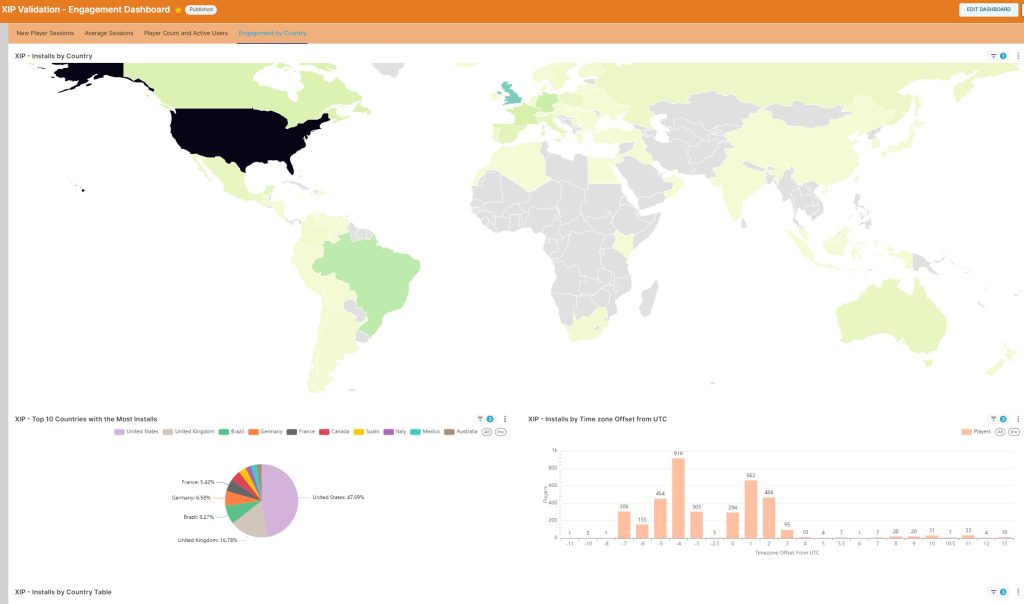
[Data taken from Stampede: Racing Royale during its time in the Xbox Insider Program. Having access to location data can help to build and support its future.]
DAY ONE DATA INTEGRATION: How to Implement Live-Ops
Incorporating a data team early in development is a great way to set your game up for success. Having a clear strategy from day one builds an understanding between developers and data analysts, allowing access to player data immediately and ultimately building a philosophy for continuous improvement and audience understanding.
For Stampede: Racing Royale, the team integrated Data Experts from the initial concepting phase, giving them the opportunity to work with the developers to immediately identify key metrics. This then allowed the team to build bespoke tools, data storage solutions and develop the best ways to analyse and present their findings.
The live-ops team also worked hand-in-hand with the community management team to create a thriving and engaged player-base at launch. By involving early adopters, leveraging initial feedback alongside the analytics, we increase the likelihood of long-standing success.
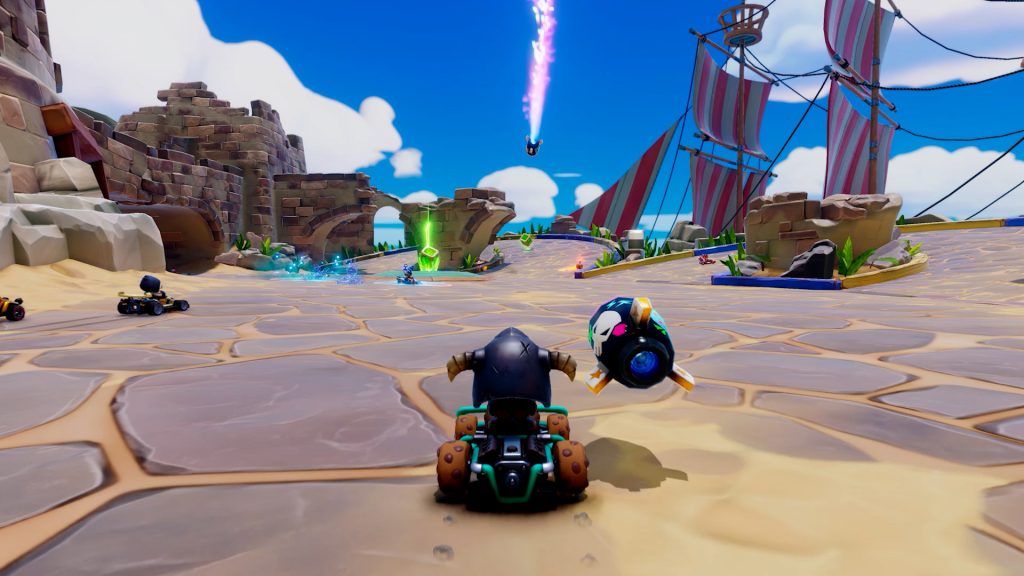
[Not everything from an initial playtest will make it to the final version of a game. Maybe a power up isn’t being used correctly or a kart is proving unpopular, the data team will the able to identify common trends and make recommendations.]
HOW TO USE DATA: Data Driven Game Design
Obviously, it’s vital that the game that has an engaging core-loop, extensive metagame and long-term appeal. To achieve this, game content must be focus tested ahead of launch with internal testing resource, global community players or in a soft-launch phase to make sure it has these key features.
Data teams also prioritise these testing phases as it allows them to gain initial insights into features use, currency allocation, popularity of content, areas of friction, as well as identification of bugs or major glitches within the game.
The data gathered during these testing phases is critical to prepare a game for launch.
Here, Live Ops Director Sean shares how these testing phases can be used by data teams:
“If, during a testing phase, my team and I are tasked with investigating the usage of power-ups throughout Stampede: Racing Royale, we would first start with a series of questions:
- What Power-Ups are the most effective?
- Which Power-Ups are used most frequently?
- How quickly are players using a Power-Up when they get it?
“From here, we’ll set out a series of telemetry events that will help us answer these questions:
- Hit rate of every Power-Up
- Frequency of every Power-Up
- Elapsed time between receiving and firing a Power-Up.
“Then, the data we receive will go through the collection process and we’ll be able to answer our initial questions and identify the top and bottom performers when it comes to power-ups:
The Sticky Bomb is the least-used power up – players are holding onto it longer than any other power-up in game and it has the lowest hit rate.
“This presents us with a whole new question: why? We can then dive into the group of players showing this information and work out their traits:
- Are they new players?
- Is their skill-level lower?
- Have we made any changes in-game that might be confusing players?
“When we think we’ve worked out the why, we can take these finding to both the Game Designers and the community team to collectively work out a solution.
Create a tutorial so new players understand how the power-up works, tweak the VFX in-game so players can see how it’s used and what its impact is, do some Community Engagement with a focus on the Sticky Bomb.
This process allows Data, Community and Design teams to work in harmony and create a more player-friendly experience.
THE FUTURE OF LIVE OPS: New Horizons for Data in Games
Looking ahead, our data teams expect a combination of Big Data and Machine Learning will lead to improved and more precise customisation for players in the future.
Thanks to the winning combination of data experts, community managers and skilled developers, games are able to continue to thrive and grow their audience.
The brightest and best games are the ones which utilise hybrid insights (data + community) to keep the game fresh, deliver content that their players are asking for, keeping them engaged and excited for future content.
Despite the saturated market of live-service games in recent years, titles like Helldivers 2 have been praised for ‘setting the new standard for live service games’.
Arrowhead’s commitment to growing communities, keeping players engaged, regularly delivering high-quality content and making the most of Data insights has ultimately helped them achieve global success.